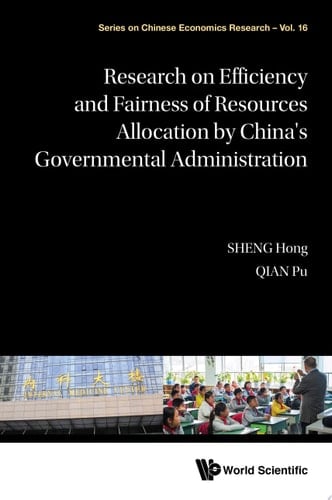
Research on Efficiency and Fairness of Resources Allocationby China's Governmental Administration
0
0
Author Description
In China, the government controls a large part of resources, such as land, energy, bank savings, and so on. This book studies the efficiency and fairness of resources allocation by governmental administration in China. The book states that it is neither fair nor efficient to allocate resources by the governmental administrations. These resources should be allocated by the market. The book analyzes the resources allocation by government administration in three key areas namely education, health care, and land. A quantitive analysis is developed for describing more precisely the situation of unfairness in fiscal resources allocation. This book also describes how ordinary people address the misposition of resources by governmental administrations by migrating from the provinces with less resources to the provinces with more resources in education or health care. Thus, the book concludes that the actual allocation of resources is determined by the interactions between ordinary people and the government. Contents: The Administrative Department as a Mechanism of Resource Allocation The Evaluation Criteria for Efficiency and Fairness on Resource Allocation Led by the Administrative Departments Applying Rent-Seeking Theory to Analyze Resource Allocation by Administrative Departments Efficiency and Fairness of Educational Resource Allocation by the Administrative Departments Efficiency and Fairness Allocation of Medical Resources by Administrative Departments Efficiency and Justice of Land Resource Allocation by the Administrative Departments Basic Conclusions and Reform Suggestions Readership: Academics, professionals, policy-makers and students interested in resources allocations by Chinese government in three key areas: education, health care and land.Resources Allocation;Governmental Administration;Education;Health Care and Land Property00
Page Count:
440
Publication Date:
2019-06-13
ISBN-10:
9813278625
ISBN-13:
9789813278622