Author Description
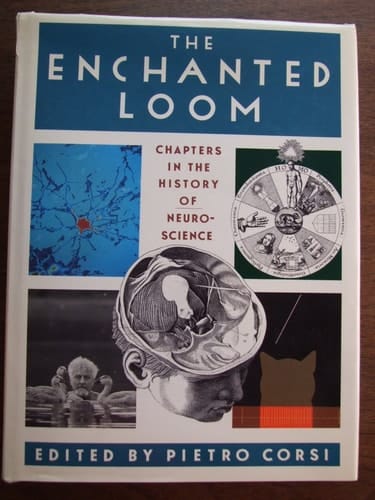
Continuing the quest toward discovering our place in the universe, The Enchanted Loom sheds light on one of the most fascinating and mysterious problems ever faced by humankind, namely, the understanding of our own minds. Written by an international team of scientists, The Enchanted Loom offers a sweeping look at the history of neuroscience from the philosophy of Aristotle to the advent of artificial intelligence. This collection of accessible, intriguing essays is supplemented by over 350 spectacular illustrations, many in color, with thorough and informative captions written by the scientists themselves. The authors discuss Descartes's contributions to thought about the brain alongside brilliant artistic studies of the central nervous system that he and masters like da Vinci executed. They show how phrenology--the long discredited study of the relationship between skull shape and mental faculties--actually represented a breakthrough in thinking about localized brain functions, and how the advent of the microscope and other equipment led to new discoveries. The contributors--including Larry Squire on memory, Solomon Snyder on psychopharmacology, and John Dowling on vision--bring the story up to the present day, unfolding the emergence of the modern neurosciences, advances in molecular biology, and the debate over how infants learn language. In addition, the book offers a short history of computers and recent thought about whether the mind works like computer software. Colorful, intelligent, informative, The Enchanted Loom offers an authoritative and enjoyable look at the history of a complex and fascinating science.
Menrva's Summary
THE THESIS
This volume investigates the historical trajectory of neuroscience, seeking to answer how humanity has evolved its understanding of the brain and the mind. Pietro Corsi and a team of international scientists utilize a multidisciplinary approach, blending historical philosophy, artistic anatomical studies, and modern biological research to map the development of neuroscientific thought. The text argues that our current comprehension of the mind is the result of centuries of incremental breakthroughs, ranging from early philosophical inquiries to contemporary computational theories.
THE SCOPE MAP
What You Will Find
- A chronological survey of brain science spanning from Aristotelian philosophy to modern artificial intelligence.
- Analysis of historical milestones including the impact of phrenology and the invention of the microscope.
- Over 350 illustrations and detailed captions documenting the evolution of anatomical visualization.
- Expert contributions covering specialized fields such as psychopharmacology, memory research, and language acquisition.
THE AUTHORITY PERSPECTIVE
Experts and readers alike recognize this work as a comprehensive and visually rich resource for those interested in the history of science. The text is frequently cited for its ability to synthesize complex academic topics into an accessible format for a broad audience.
Page Count:
384
Publication Date:
1993-09-02
Publisher:
Oxford University Press
ISBN-10:
0195086287
ISBN-13:
9780195086287
Psychology
Non-Fiction
Science
Philosophy
History
Neuroscience
Community Tags
Similar Books