Author Description
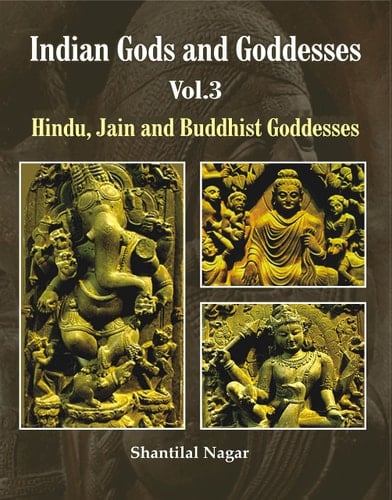
Sanskrit and English 313 (43 B/W Illustrations)PrefaceThe Indian religious traditions consider the Vedas to be of divine origin and Apaurseya or those which were not composed by any human effort. These Vedas deal with various subjects besides discussing the several gods and goddesses and other religious beliefs. Indeed it is not only the earliest body of the religious beliefs, preserved in the literary form, but it also represents a more primitive phase of thought than is recorded in any other literature. It can, moreover, be traced step-by-step through the various stages of development. It is, finally the source of the modern Hinduism which can thus be historically followed up to its. origin, throughout a period of well over thousands of years. As natural result of its value to the investigator of the religious thought in general, the study of Vedic religion gave birth in the later half of the nineteenth century, when these sacred books also attracted the attention of the foreign scholars.The ideology of the Vedic literature hovers round the Vedic gods, the fire sacrifices, and the sacrificial animals, Indeed the concept of the Vedic gods is quite' an original one and is based on the forces of nature primarily, though in the later texts several other factors like magic and other tantrik practices entered the Vedic ideology. The Atharvaveda indeed happens to be the spokesman for such magical practices. During the initial Vedic literature the gods like Rudra, Visnu, Prajapati and Indra, the most powerful of the Vedic gods, were conceived in abstract form and not in human form, nor were their iconographical features prescribed. It was, therefore, left to the imagination of the worshippers. to adore them in a suitable form.The gods and the universe happened to be the creation of Supreme soul, irrespective of their being Indra, Agni, Mitra, Varuna, Asvanikumaras, Soma, Sur
Page Count:
0
Publication Date:
2008-01-01
ISBN-10:
817646497X
ISBN-13:
9788176464970