
The Adventures of Augie March
0
0
As an Amazon Associate and affiliate partner, Menrva Books earns from qualifying purchases. Learn more
Author Description
The Adventures of Augie March is the Great American Novel. Search no further. All the trails went cold forty-two years ago. The quest did what quests very rarely do: it ended. But what was that quest, anyway - itself so essentially American? No literary masterpiece or federal epic is mentioned in the Constitution, as one of the privileges and treats actually guaranteed to the populace, along with things like liberty and life and the right to bear computerized machineguns. Still, it is easy enough to imagine how such an aspiration might have developed. As its culture was evolving, and as cultural self-consciousness dawned, America found itself to be a youthful, vast and various land, peopled by non-Americans. So how about this place? Was it a continental holding-camp of Greeks, Jews, Brits, Italians, Scandinavians and Lithuanians, together with the remaining Amerindians from ice-age Mongolia? Or was it a nation, with an identity-with a soul? Who could begin to give the answer? Among such diversity, who could crystallize the American experience? Like most quests, the quest for the Great American Novel seemed destined to be endless. You won't find that mythical beast, that holy grail, that earthly Eden-though you have to keep looking. As with the pursuit of happiness, the pursuit was the thing; you were never going to catch up. It was very American to insist on having a Great American Novel, thus rounding off all the other benefits Americans enjoy. Nobody has ever worried about the Great French Novel or the Great Russian Novel (though it is entirely intelligible that there should be some cautious talk about the Great Australian Novel). Trying to find the Great American novel, rolling up your sleeves and trying to write it: this was American. And so it would go on, for ever, just as literature never progresses or improves but simply evolves and provides the model.
Menrva's Summary
THE PULSE
Augie March, a young man growing up in Depression-era Chicago, navigates a sprawling landscape of eccentric characters and shifting social strata in search of a meaningful identity. Augie moves through various jobs, relationships, and social circles, attempting to define his own character against the pressures of a chaotic, rapidly changing American society. He encounters a series of mentors and schemers who attempt to shape his path, yet he maintains a stubborn, observational independence. The narrative is presented as a first-person account, capturing the kinetic energy of his experiences through a dense, colloquial, and highly intellectual prose style.
INSIDE THE PAGES
- Picaresque narrative structure following a series of episodic encounters
- Rich, idiomatic Chicago-inflected dialogue
- Exploration of the immigrant experience in early 20th-century America
- Philosophical inquiries into the nature of freedom and individual destiny
- Extensive cast of colorful, larger-than-life supporting characters
- Non-linear reflection on past events from the perspective of an older narrator
- Detailed depiction of urban environments and social hierarchies
- Focus on the tension between personal ambition and societal expectations
THE COLLECTIVE ECHO
Readers and critics frequently highlight the novel's linguistic vitality and its expansive, energetic prose style. Discussion often centers on the protagonist's passive yet observant nature as he drifts through various social environments. Many observers note the book's success in capturing the chaotic, pluralistic spirit of mid-century American life. The balance between the episodic, often humorous action and the underlying philosophical weight remains a primary point of analysis for scholars and casual readers alike.
Page Count:
624
Publication Date:
1966-01-01
Publisher:
The Viking Press
ISBN-10:
0140024948
ISBN-13:
9780140024944
20th Century
Literary
Coming of Age
American
Picaresque
Classic Literature
Community Tags
Other Editions(16)

Penguin Classics
2022
Default edition
Blackstone Audio, Inc.
2012
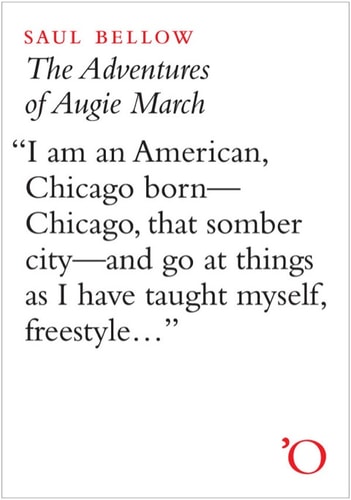
Odyssey Editions
2010
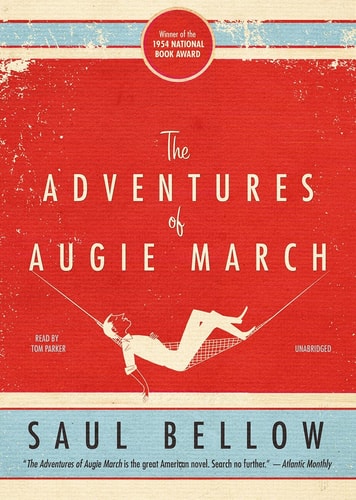
Blackstone Audio, Inc.
2008

Penguin Publishing Group
2006
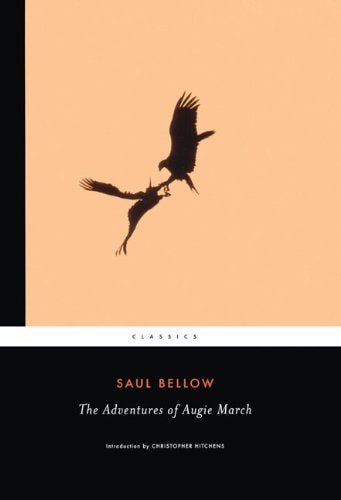
Turtleback
2006
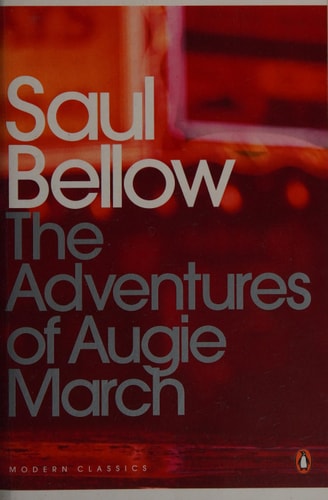
Penguin Books
2001
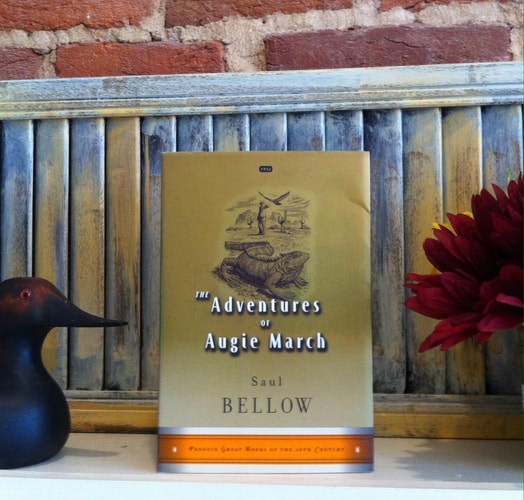
Penguin Books
1999

Penguin Books
1996

David Campbell
1995

Knopf
1995
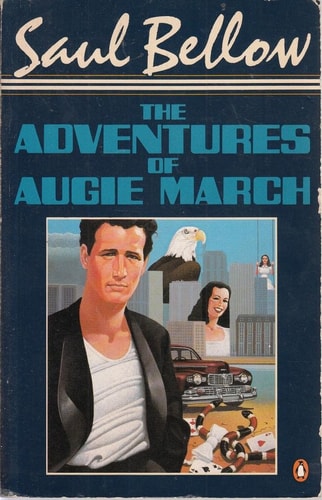
Penguin Books
1984

Viking Press
1973
The Viking Press
1966

Modern Library
1965

Viking
1953
Similar Books






Reader Comments
Share Your Thoughts
No comments yet. Be the first to share your thoughts!