U.S.A.
0
0
As an Amazon Associate and affiliate partner, Menrva Books earns from qualifying purchases. Learn more
Author Description
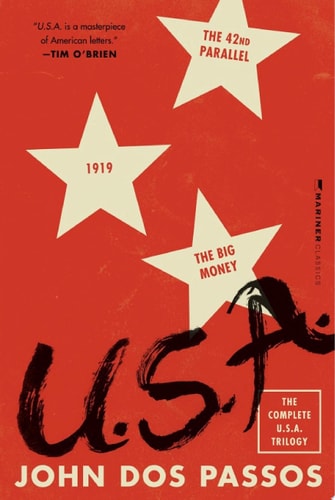
The author uses "camera eye" and "newsreel" sections to create a fragmented yet naturalistic atmosphere. The testimony of the numerous characters, both fictional and historical, gradually builds up a composite picture of American society in the first quarter of the 20th century.
Menrva's Summary
THE PULSE
The narrative captures the turbulent transformation of American society during the first quarter of the 20th century through a sprawling, multi-perspective lens. Dos Passos tracks the lives of various characters, ranging from laborers to socialites, as they navigate the shifting economic and political landscapes of the United States. These individuals face the pressures of industrialization, war, and social upheaval, often finding their personal ambitions thwarted by systemic forces. The narrative framework employs a non-linear, experimental structure that rejects traditional singular protagonists in favor of a collective portrait of a nation in flux.
INSIDE THE PAGES
- Use of the 'Camera Eye' technique to provide subjective, stream-of-consciousness impressions
- Integration of 'Newsreel' sections featuring headlines and song lyrics from the era
- Inclusion of biographical sketches of real historical figures
- Multi-perspective narrative structure involving numerous interconnected characters
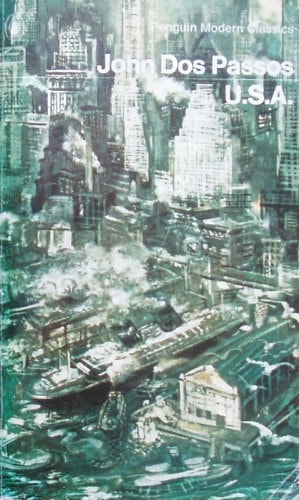
- Naturalistic depiction of urban and industrial environments
- Focus on the impact of capitalism and political ideology on individual lives
- Fragmented prose style reflecting the chaos of the modern age
- Broad geographical scope covering various regions of the United States
THE COLLECTIVE ECHO
Discussion often centers on the technical innovation of the work and its success in capturing the zeitgeist of early 20th-century America. Readers frequently highlight the challenging nature of the fragmented narrative, noting that it requires patience to assemble the disparate pieces into a cohesive whole. Critics often praise the author's ability to balance intimate character studies with a macro-level analysis of societal shifts. The work is widely recognized for its influence on experimental literature and its uncompromising portrayal of the American experience during a period of rapid change.
Page Count:
1184
Publication Date:
1966-01-01
Publisher:
Penguin Books Ltd
ISBN-10:
0140024182
ISBN-13:
9780140024180
Historical Fiction
Modernist
American
Social Commentary
Contemporary
Political fiction