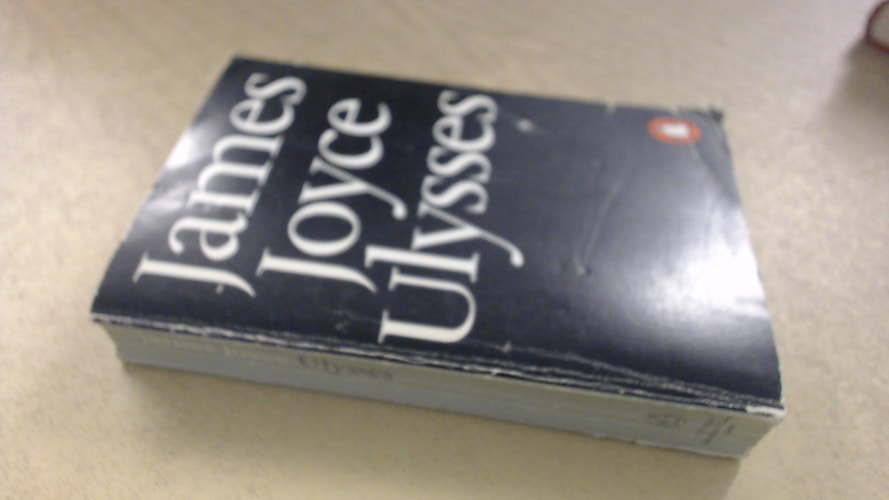
Ulysses
0
0
As an Amazon Associate and affiliate partner, Menrva Books earns from qualifying purchases. Learn more
Author Description
ULYSSES is a novel by the Irish author James Joyce. It was first serialised in parts in the American journal The Little Review from March 1918 to December 1920, and then published in its entirety by Sylvia Beach on 2 February 1922, in Paris. Considered one of the most important works of Modernist literature, it has been called "a demonstration and summation of the entire movement". "Before Joyce, no writer of fiction had so foregrounded the process of thinking." Ulysses chronicles the passage of Leopold Bloom through Dublin during an ordinary day, 16 June 1904 (the day of Joyce's first date with his future wife, Nora Barnacle). The title alludes to Odysseus (Latinised into Ulysses), the hero of Homer's Odyssey, and establishes a series of parallels between characters and events in Homer's poem and Joyce's novel (e.g., the correspondence of Leopold Bloom to Odysseus, Molly Bloom to Penelope, and Stephen Dedalus to Telemachus). Joyce fans worldwide now celebrate 16 June as Bloomsday. Ulysses is approximately 265,000 words in length, uses a lexicon of 30,030 words (including proper names, plurals and various verb tenses), and is divided into eighteen episodes. Since publication, the book has attracted controversy and scrutiny, ranging from early obscenity trials to protracted textual "Joyce Wars." Ulysses' stream-of-consciousness technique, careful structuring, and experimental prose—full of puns, parodies, and allusions, as well as its rich characterisations and broad humour, made the book a highly regarded novel in the Modernist pantheon. In 1998, the Modern Library ranked Ulysses first on its list of the 100 best English-language novels of the 20th century.
Menrva's Summary
THE PULSE
Leopold Bloom navigates the mundane and profound occurrences of a single day in Dublin, mirroring the epic scale of Homeric myth within the confines of urban reality. Leopold Bloom, an advertising canvasser, moves through the streets of Dublin on June 16, 1904, encountering various citizens and reflecting on his past and present. His path intersects with Stephen Dedalus, a young intellectual struggling with his own artistic and familial burdens. The narrative framework shifts constantly, utilizing internal monologue and varying stylistic registers to capture the totality of human consciousness. These characters face the constraints of social expectations, personal grief, and the physical limitations of their environment as they move toward an eventual, albeit indirect, meeting.
INSIDE THE PAGES
- Extensive use of stream-of-consciousness narrative technique
- Eighteen distinct episodes, each employing a unique stylistic approach
- Parallel structure mapping characters to Homeric archetypes
- Dense intertextual references and literary allusions
- Linguistic experimentation including puns, parodies, and neologisms
- Detailed, naturalistic depiction of early 20th-century Dublin
- Shift in perspective between multiple primary characters
- Integration of internal monologue to represent cognitive processes
THE COLLECTIVE ECHO
Discussion often centers on the technical complexity of the prose and the effectiveness of the stream-of-consciousness method in capturing the human experience. Readers frequently highlight the challenge of the shifting narrative styles, which require significant attention to navigate across the eighteen episodes. Critics emphasize the balance between the granular, often humorous details of daily life and the overarching mythological framework that provides structure to the chaos. The work remains a focal point for debates regarding the limits of language and the representation of consciousness in literature. Many readers find that the text rewards repeated engagement, as new layers of allusion and structural design become apparent with each reading.
Page Count:
720
Publication Date:
1969-01-01
Publisher:
Penguin
ISBN-10:
014003000X
ISBN-13:
9780140030006
Literary Fiction
Genre Fiction
classic
Literature & Fiction
Contemporary
Experimental
Irish literature
New Used & Rental Textbooks
Classics
Modernist
Community Tags
Other Editions(37)
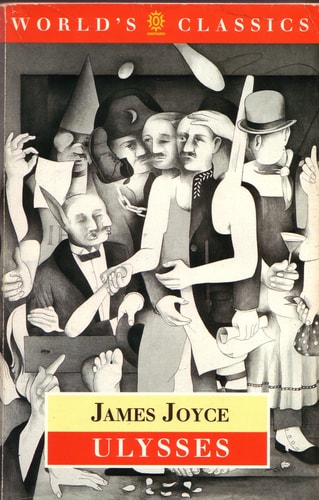
Oxford University Press
2099
Default edition
Independently published
2025

Independently published
2024

Independently published
2024

Independently published
2024

Independently published
2023

Independently published
2023

Independently published
2023

Independently published
2023

Independently published
2023

Independently Published
2022

Independently published
2022

Independently Published
2022

Independently Published
2022
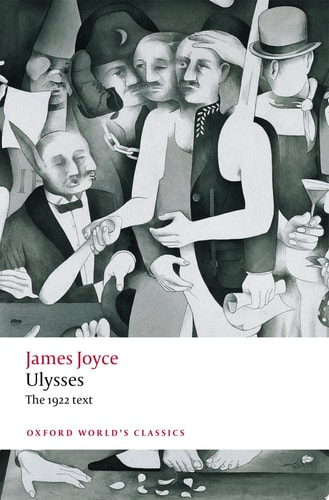
Oxford University Press
2022

Independently Published
2022

Independently published
2022

Independently published
2022
Independently Published
2022

Independently Published
2021

Independently Published
2021

Independently published
2021

Independently published
2020
Pandora's Box Classics
2020

Digireads.com Publishing
2016

General Books LLC
2010
OUP Oxford
2008

Recorded Books, Inc.
2004
Vintage
1999

Penguin Group USA
1998
Naxos Audio Books
1995

Everyman
1992
Penguin
1969

Vintage
1967

Collins Educational
1961
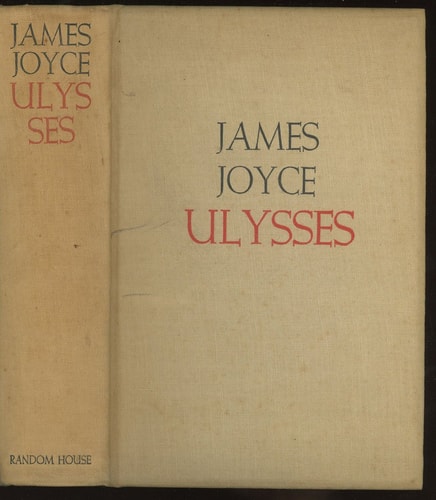
Random House Inc
1934
Select Music & Video Distribution
1900
Similar Books
Reader Comments
Share Your Thoughts
No comments yet. Be the first to share your thoughts!