Author Description
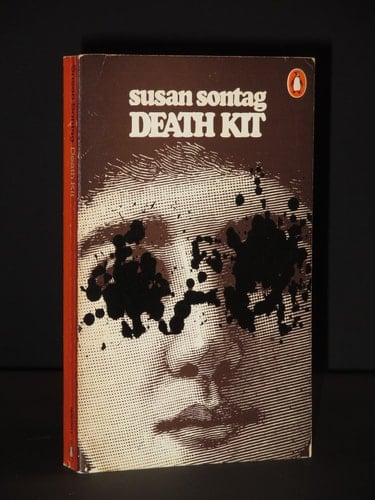
First published in 1967, "Death Kit" is a classic of modern fiction. Blending realism and dream, Susan Sontag's second novel offers a passionate exploration of the recesses of the American conscience. The novel is a narrative of the suffering of Dalton 'Diddy' Harron, told through his own observations. He works in advertising for a microscope manufacturer, is thirty-three and divorced and a month ago tried to commit suicide. The haphazard events of his life, including killing a railway worker and falling in love with a blind girl, are brought to us through the lens of Diddy's own mind. We follow him through his journey to justify his actions and exorcise his inner demons, but we can see what is happening to Diddy only from inside his head, in the present, and the balance of his mind does not always bear close scrutiny.
Menrva's Summary
THE PULSE
Following a failed suicide attempt, Dalton 'Diddy' Harron navigates a series of increasingly surreal and violent events that force him to confront the instability of his own consciousness. Diddy, a thirty-three-year-old advertising professional, finds his reality fracturing after he kills a railway worker during a train trip. His objective is to reconcile his internal state with the external world, yet he is constantly thwarted by his own unreliable perceptions and psychological fragmentation. The narrative is presented through a tight, first-person perspective that traps the reader within the protagonist's deteriorating mental state, blurring the lines between objective reality and internal projection.
INSIDE THE PAGES
- Unreliable first-person narration
- Blending of realism and dreamlike sequences
- Exploration of existential dread and the American conscience
- Non-linear psychological progression
- Focus on the subjectivity of memory and perception
- Themes of alienation and self-destruction
- Minimalist yet dense prose style
- Examination of the disconnect between professional life and inner turmoil
THE COLLECTIVE ECHO
Readers and critics frequently describe this work as a cerebral and challenging examination of the human psyche. Discussion often centers on the novel's deliberate ambiguity, which forces the reader to question the validity of Diddy's experiences throughout the narrative. Many highlight the author's ability to maintain a claustrophobic atmosphere that mirrors the protagonist's mental decline. While some find the pacing slow due to its introspective nature, others appreciate the stylistic precision used to depict the breakdown of a rational mind. The novel remains a significant point of interest for those studying mid-century American literature and the intersection of philosophy and fiction.
Page Count:
320
Publication Date:
1970-01-01
ISBN-10:
0140030832
ISBN-13:
9780140030839
Literary Fiction
Literary
Modernist
Psychological
Existentialism