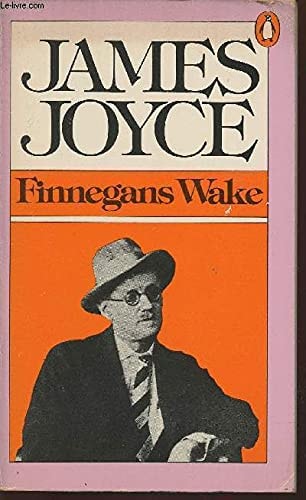
Finnegans Wake
0
0
As an Amazon Associate and affiliate partner, Menrva Books earns from qualifying purchases. Learn more
Author Description
Finnegans Wake is a novel by Irish writer James Joyce. It is significant for its experimental style and reputation as one of the most difficult works of fiction in the English language. Written in Paris over a period of seventeen years, and published in 1939, two years before the author's death, Finnegans Wake was Joyce's final work. The entire book is written in a largely idiosyncratic language, consisting of a mixture of standard English lexical items and neologistic multilingual puns and portmanteau words, which many critics believe were attempts to recreate the experience of sleep and dreams. Owing to the work's expansive linguistic experiments, stream of consciousness writing style, literary allusions, free dream associations, and abandonment of narrative conventions, Finnegans Wake remains largely unread by the general public. Despite the obstacles, readers and commentators have reached a broad consensus about the book's central cast of characters and, to a lesser degree, its plot. However, a number of key details remain elusive. The book discusses, in an unorthodox fashion, the Earwicker family, comprising the father HCE, the mother ALP, and their three children Shem the Penman, Shaun the Postman, and Issy. Following an unspecified rumour about HCE, the book, in a nonlinear dream narrative, follows his wife's attempts to exonerate him with a letter, his sons' struggle to replace him, Shaun's rise to prominence, and a final monologue by ALP at the break of dawn. The opening line of the book is a sentence fragment which continues from the book's unfinished closing line, making the work a never-ending cycle. Many noted Joycean scholars such as Samuel Beckett and Donald Phillip Verene link this cyclical structure to Giambattista Vico's seminal text La Scienza Nuova ("The New Science"), upon which they argue Finnegans Wake is structured.
Menrva's Summary
THE PULSE
The narrative centers on the cyclical, dream-like existence of the Earwicker family as they navigate a landscape of shifting identities and historical recurrence. The protagonist, HCE, faces an unspecified scandal that triggers a fragmented, non-linear exploration of his family's internal dynamics. His wife, ALP, attempts to defend his reputation through a mysterious letter, while their children, Shem, Shaun, and Issy, compete for dominance within the shifting power structure. The narrative framework abandons traditional linear progression, instead utilizing a circular structure that begins and ends in a continuous loop, mirroring the fluid logic of a dream state.
INSIDE THE PAGES
- Extensive use of multilingual puns and portmanteau words
- Stream of consciousness narrative technique
- Cyclical structure based on Viconian historical theory
- Dense layering of literary and historical allusions
- Idiosyncratic, invented linguistic patterns
- Nonlinear progression of events
- Symbolic representation of archetypal figures
- Integration of dream logic and free association
THE COLLECTIVE ECHO
Discussion often centers on the extreme linguistic density that characterizes the work, which many critics view as an attempt to replicate the subconscious mind. Readers frequently highlight the difficulty of navigating the text's unique vocabulary, which requires significant effort to decode. Scholars often debate the influence of Giambattista Vico's theories on the book's cyclical architecture and the symbolic roles of the Earwicker family members. While some view the work as an impenetrable barrier, others appreciate the rhythmic, musical quality of the prose. The consensus remains that the text functions more as an immersive linguistic experience than a traditional narrative story.
Page Count:
628
Publication Date:
1959-01-02
Publisher:
Penguin Books
ISBN-10:
0140042288
ISBN-13:
9780140042283
Literary Fiction
Avant-garde
Irish literature
Modernist
Experimental
Contemporary
Community Tags
Other Editions(6)



Similar Books



Reader Comments
Share Your Thoughts
No comments yet. Be the first to share your thoughts!