Author Description
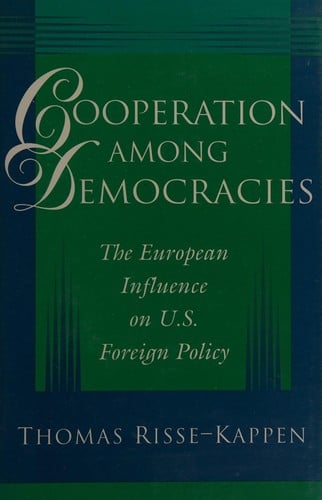
In exploring the special nature of alliances among democracies, Thomas Risse-Kappen argues that the West European (and Canadian) allies exerted greater influence on American foreign policy during the Cold War than most analysts assume. In so doing he challenges traditional alliance theories that emphasize strategic interactions and power-based bargaining among states that are also economic rivals. For a better understanding of the transatlantic relationship, the author proposes turning to liberal theories of international affairs. Liberal democracies, Risse-Kappen believes, are inherently likely to form the sort of "pacific federations" described by Immanuel Kant (or "pluralistic security communities" in Karl W. Deutsch's sense) that the NATO alliances of the postwar period so strikingly resemble. Through detailed case studies, Risse-Kappen shows that the Europeans affected security decisions concerning vital U.S. interest during the 1950-1953 Korean war, the 1958-1963 test ban negotiations, and the 1962 Cuban missile crisis - all during a span of time in which the U.S. enjoyed undisputed economic and military supremacy in the alliance. He situates these case studies within a theoretical framework demonstrating that the European influence on decision-making processes in Washington worked through three mechanisms: norms prescribing timely consultations among the allies, use of domestic pressures for leverage in transatlantic interactions, and transnational and transgovernmental coalitions among societal and bureaucratic actors. The book's findings have important implications for the post-Cold War era, suggesting that the transatlantic security community is likely to survive the end of the Soviet threat.
Page Count:
250
Publication Date:
1995-01-01
ISBN-10:
0691036556