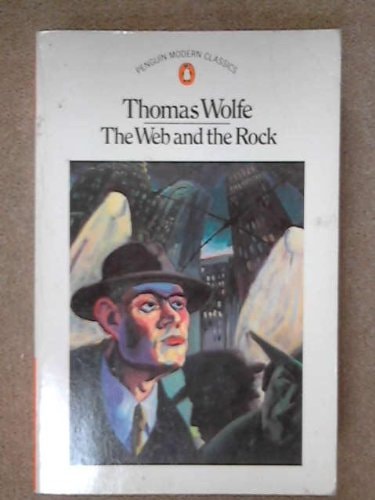
The Web and the Rock
0
0
As an Amazon Associate and affiliate partner, Menrva Books earns from qualifying purchases. Learn more
Author Description
This book tells the growth of the protagonist George Webber: came to the metropolis New York from a small town in the southern United States but the novel written with all his energies was left out by the publishers; fell in love with the married man Esther but was incompatible with the upper class; came to Europe but the fascist came to power. After a series of struggle and confusion, the author had the impulse of returning to the hometown but he deeply understood that he could no longer find the spiritual home. In this work, the author gradually changes the focus from people's inner world to the outside world and begins to focus on depicting the whole American society, but it is still filled with sadness and confusion.
Menrva's Summary
THE PULSE
George Webber leaves his small-town North Carolina roots for the sprawling, indifferent landscape of New York City, only to find his artistic ambitions and romantic desires thwarted by the rigid social structures of the urban elite.
Driven by a desperate need to establish himself as a writer, Webber navigates the harsh realities of the publishing industry and the complexities of a volatile relationship with the socialite Esther Jack. The narrative follows his physical movement from the South to the metropolis and eventually to Europe, mirroring his internal shift from youthful idealism to a more cynical, outward-looking perspective. Written with a dense, lyrical intensity, the novel functions as a semi-autobiographical account of the artist's struggle to reconcile his provincial origins with the demands of a changing American society.
INSIDE THE PAGES
- Semi-autobiographical narrative structure
- Exploration of the North Carolina to New York migration
- Detailed depiction of the early 20th-century publishing industry
- Complex romantic entanglement with a socialite muse
- Shift from internal introspection to social observation
- Atmospheric descriptions of urban and European settings
- Themes of alienation and the impossibility of returning home
- Posthumous editorial intervention by Edward Aswell
THE COLLECTIVE ECHO
Discussion often centers on the stylistic evolution of the author as he transitions from the intimate character studies of his earlier works to a broader critique of American society. Readers frequently highlight the raw, poetic quality of the prose, noting that it captures the turbulence of the protagonist's internal state with significant intensity. Critics often debate the effectiveness of the editorial changes made to the original manuscript, which some argue lead to an inconsistent narrative flow. Despite these structural critiques, the work remains a significant point of interest for those examining the intersection of personal experience and the broader cultural shifts of the 1930s.
Page Count:
768
Publication Date:
1984-06-28
Publisher:
Penguin
ISBN-10:
0140065768
ISBN-13:
9780140065763
American
Classic Literature
Autobiographical fiction
Classics
20th Century
Coming of Age
Contemporary
Community Tags
Other Editions(5)


Similar Books