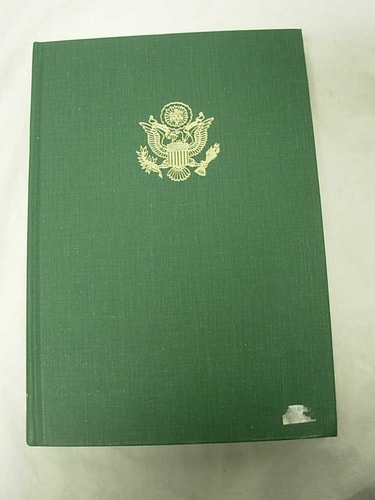
The Signal Corps: The Test (December 1941 to July 1943)
0
0
As an Amazon Associate and affiliate partner, Menrva Books earns from qualifying purchases. Learn more
Author Description
December 1941: War In The Philippines. The Impact Of War In The Office Of The Chief Signal Officer -- The Call For Troops (january-february 1942): Plans For Getting Enlisted Men. Plans For Getting Officers. Getting Civilians -- The Call For Equipment (january-may 1942): Radio For Mobile Armies And For World Communication. Radio Airborne. Radar Into The Air For Interception And Search. Ground Radar: The Continuing Exigencies Of Coastal Defense -- The First Months Of The War Overseas (january-may 1942): Toward Pacific Outposts. China-burma-india Vicissitudes -- Alaska Communications (january-july 1942): The Command Network. Kodiak, Otter Point, Dutch Harbor. The Alcan Highway. Canol And The Northwest Ferry Route. Communications For Ground And Air Warning Systems -- The First Billion Dollar Signal Corps (january-july 1942): The Headquarters Supply Organization. The Field Organization -- Signal Schooling (january-july 1942): The Training Structure. Camp Crowder. Camp Kohler. Fort Monmount. Camp Murphy -- Signal Equipment: Wire And Radio (june-october 1942): Toward Automatic Teletype And Tape Relay. Ground Radio And Radio Link Or Relay, Transformed By Fm. Signal Corps Provides Vhf Command Radio For Army Airplanes -- Signal Equipment: Radar (june-october 1942): Airborne Radars On The Increase. Iff--identification: Friend Or Foe; Signal Corps Altimeters: Secretary Patterson's Objections; Ai--airborne Interception Radar; Asv--air-to-surface-vessel Microwave Radar -- Ground Radar Potentialities Multiplied By Microwave Techniques. Scr-296, Seacoast Artillery Fire Control Radar; Scr-582, Harbor Surveillance Radar; Scr-615, Microwave Radar For Gci, Ground-controlled Interception; Scr-602, Lightweight Warning Radar; Scr-584, Microwave Tracking Or Gl, Gun-laying Radar; Mew, Microwave Early Warning Radar -- Accumulating Strength Over The World (june-october 1942): Build-up For The Air Forces In The Northeast. Radars For Aircraft Warning. Defense To Offense In The West -- Preparing
Menrva's Summary
THE THESIS
This volume investigates how the United States Army Signal Corps managed the rapid expansion of personnel, training, and technological development required to support global military operations during the initial phase of World War II. Author George Raynor Thompson utilizes official military records and administrative archives to document the transition of the Signal Corps from a peacetime organization to a massive, billion-dollar logistical entity capable of sustaining worldwide communication and radar networks.
THE SCOPE MAP
What You Will Find
- Administrative history of the Office of the Chief Signal Officer from December 1941 to July 1943.
- Technical evolution of radar systems, including airborne interception, ground-controlled interception, and microwave tracking.
- Logistical data regarding the procurement of radio equipment, teletype systems, and wire communications.
- Training structures and expansion of facilities such as Camp Crowder and Fort Monmouth.
Scope Limits
- The text focuses primarily on administrative and logistical operations rather than tactical combat narratives.
- Coverage is restricted to the specific timeframe of December 1941 through July 1943.
THE AUTHORITY PERSPECTIVE
Historians and military researchers frequently cite this work as a foundational, highly detailed primary source for understanding the logistical backbone of the U.S. Army during the early years of the war. Readers often note the academic density of the prose, which provides an exhaustive account of the bureaucratic and technical challenges faced by the Signal Corps.
Page Count:
621
Publication Date:
2003-01-01
Publisher:
Center Of Military History, United States Army
ISBN-10:
016001915X
ISBN-13:
9780160019159
History
United States
World War
Military History
Technology history
Communications
Community Tags
Similar Books