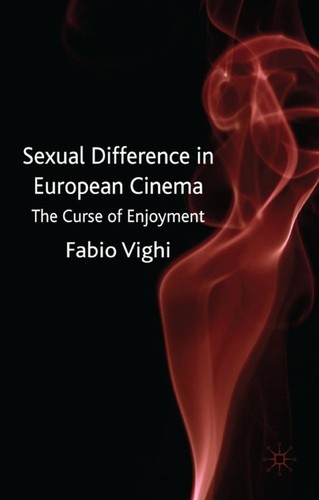
Sexual Difference in European Cinema
0
0
As an Amazon Associate and affiliate partner, Menrva Books earns from qualifying purchases. Learn more
Author Description
What can European cinema tell us about sexual difference? Can film shed some light on Lacan's infamous thesis that 'there is no such thing as a sexual relationship? Fabio Vighi argues that cinema is the ideal medium to unravel not only Lacan's theory of sexuality, but also its social and political implications. This book brings together cinematic fiction and psychoanalysis to identify the repressed kernel that structures our experience as subjects immersed in a specific socio-symbolic context. The filmic representation of sexual difference provides here the key paradigm to unravel the discrepancy and interconnections between reality and the Real of enjoyment. Vighi examines a number of seminal works in post-war European cinema from two main perspectives: the masculine logic of courtly love, and feminine enjoyment. Inspired by Slavoj Zizek's reading of Lacan, the book analyses directors such as Fellini, Truffaut, Antonioni, Bergman, Ophuls, Rossellini, Bunuel, Rohmer, Fassbinder and many others.--Jacket.
Menrva's Summary
THE THESIS
This book investigates how European cinema can illuminate the complex concept of sexual difference and its relation to psychoanalytic theory. Fabio Vighi, drawing on Lacanian psychoanalysis and inspired by Slavoj Žižek, explores how film represents the repressed elements that shape our subjective experience within socio-symbolic contexts. The analysis focuses on the discrepancy between reality and the 'Real' of enjoyment, using filmic representations of sexual difference as a primary lens. Vighi examines seminal post-war European films, considering perspectives on courtly love and feminine enjoyment.
THE SCOPE MAP
- Analysis of Lacan's thesis on the absence of a sexual relationship.
- Exploration of the social and political implications of sexuality as depicted in film.
- Identification of the repressed kernel structuring subjective experience.
- Examination of the discrepancy and interconnections between reality and the Real of enjoyment.
- Focus on post-war European cinema.
- Analysis of the masculine logic of courtly love.
- Exploration of feminine enjoyment.
- In-depth study of directors including Fellini, Truffaut, Antonioni, Bergman, Ophuls, Rossellini, Bunuel, Rohmer, and Fassbinder.
THE AUTHORITY PERSPECTIVE
The book is positioned as a scholarly exploration that bridges cinematic representation with psychoanalytic theory, specifically Lacanian concepts. It aims to unravel complex ideas about sexuality and subjectivity through the medium of film. The analysis is grounded in the works of prominent European directors, suggesting a dense and theoretically informed approach for readers interested in the intersection of film studies and psychoanalysis. The work is likely to appeal to academics and students in film theory, cultural studies, and psychoanalytic thought.
Page Count:
258
Publication Date:
2009-01-01
ISBN-10:
023054925X
ISBN-13:
9780230549258
Non-Fiction
Philosophy
Art
Psychoanalysis
Film Studies
Community Tags
Similar Books