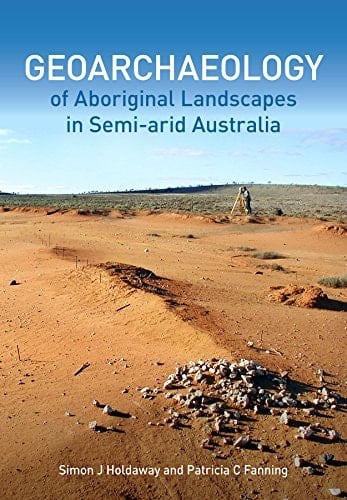
Geoarchaeology of Aboriginal Landscapes in Semi-arid Australia
0
0
Author Description
This book provides readers with a unique understanding of the ways in which Aboriginal people interacted with their environment in the past at one particular location in western New South Wales. It also provides a statement showing how geoarchaeology should be conducted in a wide range of locations throughout Australia. One of the key difficulties faced by all those interested in the interaction between humans and their environment in the past is the complex array of processes acting over different spatial and temporal scales. The authors take account of this complexity by integrating three key areas of study - geochronology, archaeology and geomorphology - applied at a landscape scale, with the intention of understanding the record of how Australian Aboriginal people interacted with the environment through time and across space. This analysis is based on the results of archaeological research conducted at the University of New South Wales Fowlers Gap Arid Zone Research Station between 1999 and 2002 as part of the Western New South Wales Archaeology Program (WNSWAP), an interdisciplinary, geoarchaeological program targeted at exploiting the potential offered by archaeological deposits in western NSW, Australia. * Integrates geochronology, geomorphology and archaeology applied at a landscape scale. * Provides a critique of the current approaches to archaeological survey in Australia. * Describes methods for understanding the raw material selection and technology of flake production. * Shows how this geoarchaeological approach to studying the Australian arid zone can be related to similar approaches worldwide.
Page Count:
197
Publication Date:
2014-01-01
ISBN-10:
0643108947
ISBN-13:
9780643108943