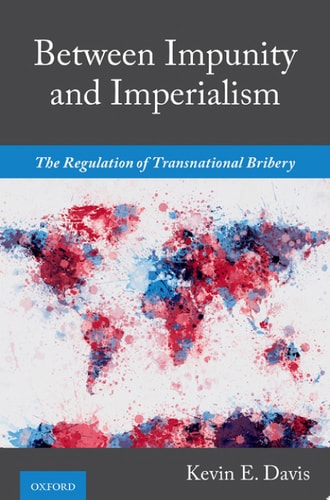
Between Impunity and Imperialism
0
0
As an Amazon Associate and affiliate partner, Menrva Books earns from qualifying purchases. Learn more
Author Description
When People Pay Bribes To Foreign Public Officials, How Should The Law Respond? This Question Has Been Debated Ever Since The Enactment Of The U.s. Foreign Corrupt Practices Act Of 1977, And Some Of The Key Arguments Can Be Traced Back To Cicero In The Last Years Of The Roman Republic And Edmund Burke In Late Eighteenth-century England. In Recent Years, The U.s. And Other Members Of The Oecd Have Joined Forces To Make Anti-bribery Law One Of The Most Prominent Sources Of Liability For Firms And Individuals Who Operate Across Borders. The Modern Regime Is Premised On The Idea That Transnational Bribery Is A Serious Problem Which Invariably Merits A Vigorous Legal Response. The Shape Of That Response Can Be Summed Up In The Phrase Every Little Bit Helps, Which In Practice Means That: Prohibitions On Bribery Should Capture A Broad Range Of Conduct; Enforcement Should Target As Broad A Range Of Actors As Possible; Sanctions Should Be As Stiff As Possible; And As Many Agencies As Possible Should Be Involved In The Enforcement Process. An Important Challenge To The Oecd Paradigm, Labelled Here The Anti-imperialist Critique, Accepts That Transnational Bribery Is A Serious Problem But Questions The Conventional Responses. This Book Uses A Series Of High-profile Cases To Illustrate Key Elements Of Transnational Bribery Law In Action, And Analyzes The Law Through The Lenses Of Both The Oecd Paradigm And The Anti-imperialist Critique. It Ultimately Defends A Distinctively Inclusive And Experimentalist Approach To Transnational Bribery Law.
Menrva's Summary
THE THESIS
This book investigates the optimal legal response to transnational bribery by evaluating the tension between the OECD anti-bribery paradigm and the anti-imperialist critique. Kevin E. Davis, a professor of law, utilizes historical context and contemporary legal theory to analyze how international anti-bribery regimes function. He argues that the current enforcement-heavy approach requires a shift toward a more inclusive and experimentalist framework to address the complexities of global corruption.
THE SCOPE MAP
What You Will Find
- Analysis of the U.S. Foreign Corrupt Practices Act and OECD anti-bribery conventions.
- Examination of the anti-imperialist critique regarding extraterritorial legal enforcement.
- Case studies of high-profile transnational bribery investigations.
- A proposed experimentalist model for future international legal cooperation.
Scope Limits
- The text does not provide a comprehensive manual for corporate compliance officers.
- It does not focus on domestic bribery laws outside the context of transnational operations.
THE AUTHORITY PERSPECTIVE
Legal scholars and practitioners recognize this work as a significant contribution to the debate on extraterritorial jurisdiction and international regulatory standards. Readers frequently note the academic density of the prose, which makes it a primary resource for those studying the intersection of global governance and anti-corruption policy.
Page Count:
304
Publication Date:
2019-01-01
Publisher:
Oxford University Press
ISBN-10:
0190070811
ISBN-13:
9780190070816
Economics
Law
Ethics
Business Law
International Law
Community Tags
Other Editions(2)
Similar Books