SARS: A Case Study in Emerging Infections
0
0
As an Amazon Associate and affiliate partner, Menrva Books earns from qualifying purchases. Learn more
Author Description
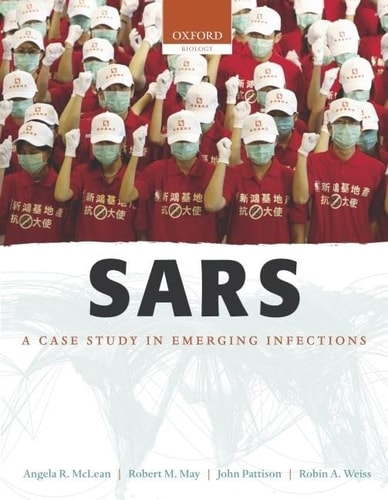
The sudden appearance and rapid spread of Severe Acute Respiratory Syndrome (SARS) in 2002 served to alert the world to the fact that emerging infections are a global problem. Living in affluent societies with well developed health care systems does not necessarily protect people from the dangers posed by life-threatening infections. The SARS epidemic tested global preparedness for dealing with a new infectious agent and raised important questions: how did we do, and what did we learn? This book uses the SARS outbreak as a case study to enumerate the generic issues that must be considered when planning the control of emerging infections. Emerging infections are more than just a current biological fashion: the bitter ongoing experience of AIDS and the looming threat of pandemic influenza teach us that the control of infectious disease is a problem we have not yet solved. Scientists from a broad range of disciplines - biologists, physicians, and policy-makers - all need to prepare. But prepare for what? SARS: A Case Study in Emerging Infections provides an up-to-date and accessible overview of the tasks that must be addressed by a community that wishes to confront emerging infections. Each chapter is written by a world expert and offers an authoritative and timely overview of its subject. While focusing on SARS, the book addresses a whole range of pertinent considerations and issues, from the use of new mathematical models to account for
Menrva's Summary
THE THESIS
How can the global community effectively prepare for and control the emergence of novel infectious diseases? The authors, a team of distinguished scientists and medical experts, utilize the 2002 SARS outbreak as a primary case study to evaluate public health responses and systemic vulnerabilities. By synthesizing biological data, clinical observations, and policy analysis, the text provides a framework for understanding the challenges inherent in managing zoonotic pandemics in an interconnected world.
THE SCOPE MAP
What You Will Find
- Analysis of the 2002 SARS epidemic as a model for emerging pathogen control.
- Application of mathematical modeling to track and predict disease transmission.
- Evaluation of global public health infrastructure and emergency preparedness strategies.
- Multidisciplinary perspectives from biologists, physicians, and policy-makers regarding future pandemic threats.
THE AUTHORITY PERSPECTIVE
Experts and reviewers identify this work as a foundational text for understanding the intersection of biology and public health policy. Readers frequently note the clarity of the prose, which makes complex epidemiological concepts accessible to both specialists and informed laypeople.
Page Count:
142
Publication Date:
2005-05-12
Publisher:
Oxford University Press
ISBN-10:
0198568185
ISBN-13:
9780198568186
Science
History
Medicine
Biology
Epidemiology
Public Health
Communicable Diseases