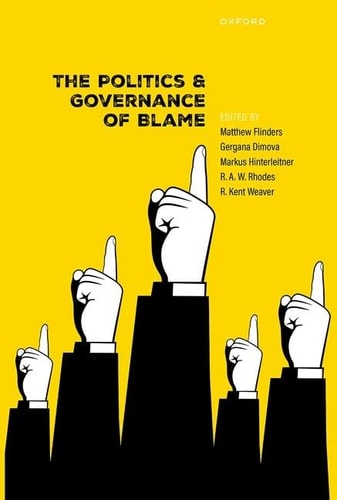
The Politics and Governance of Blame
0
0
As an Amazon Associate and affiliate partner, Menrva Books earns from qualifying purchases. Learn more
Author Description
From Coping With Covid-19 Through To The Politics Of Presidential Elections, From The Emergence Of Populist Pressures Through To The Management Of Rising Inequality, And From The Repair Of Historical Injustices Through To The Outbreak Of New International Conflicts - To Mention Just A Few Relevant Topics - The Analysis Of Modern Politics And Governance Is Increasingly Framed Through A Focus On One Simple Question: 'who's To Blame?' Answering This Question Is, However, Rarely Straightforward. Temporal Dimensions, Bureaucratic Complexity, Multi-levelled Relationships And The Existence Of Often Deep Emotional Dynamics In Fast-moving Environments Can Serve To Complicate The Attribution Of Responsibility. The Existence Of A Powerful And Arguably Increasingly Aggressive 'negativity Bias' Within Modern Societies Also Frames The Allocation Of Blame With A Certain Tone And Texture That Explains Its Links To Notions Of 'naming', 'shaming' And Increasingly 'gaming'. This, In Turn, Flows Through Into Broader And Often Socio-cultural Questions About Scapegoating, Sacrificial Lambs And 'saying Sorry', And Less Of A Focus On Questions Concerning The Politics Of Praise, Positivity And Credit-claiming-- Provided By Publisher.
Menrva's Summary
THE THESIS
This book investigates the mechanisms of blame attribution in modern governance and the socio-cultural consequences of a pervasive negativity bias in political discourse. The authors, a team of distinguished scholars including Dr. Gergana Dimova and Prof. R. A. W. Rhodes, utilize a multidisciplinary framework to examine how responsibility is assigned within complex, multi-level bureaucratic systems. By analyzing contemporary crises ranging from pandemic management to international conflict, the text argues that the focus on 'who is to blame' often obscures the complexities of policy outcomes and shifts the political landscape toward scapegoating and performative accountability.
THE SCOPE MAP
What You Will Find
- Analysis of blame attribution in the context of bureaucratic complexity and multi-level governance.
- Examination of the 'negativity bias' and its influence on modern political tone and texture.
- Exploration of socio-cultural phenomena including scapegoating, sacrificial lambs, and the politics of apology.
- Comparative study of credit-claiming versus blame-avoidance strategies in contemporary political environments.
THE AUTHORITY PERSPECTIVE
Experts identify this work as a significant contribution to the study of political accountability and the psychological dimensions of governance. Scholars frequently note the text's ability to synthesize complex institutional dynamics with the emotional realities of modern political life.
Page Count:
864
Publication Date:
2024-01-01
Publisher:
Oxford University Press
ISBN-10:
0198896387
ISBN-13:
9780198896388
Politics
Political Theory
Governance
Public Policy
Sociology
Community Tags
Similar Books