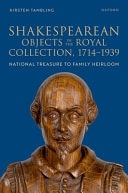
Shakespearean Objects in the Royal Collection, 1714–1939: From National Treasure to Family Heirloom
0
0
As an Amazon Associate and affiliate partner, Menrva Books earns from qualifying purchases. Learn more
Author Description
The British Royal Collection Includes Nearly 2,000 Objects With A Connection To Shakespeare, The Majority Of Them Acquired In The Years Since The Hanoverian Accession In 1714. Royal Collecting Of Shakespeare Has Therefore Broadly Tracked The Development, And Entrenchment, Of The Hanoverian - And Latterly The Saxe-coburg Gotha - Royal Family. This Is Also The Period During Which Shakespeare Was Becoming Established As Britain's 'national Poet', Partly Through Large-scale Public Commemorations Such As David Garrick's 'shakespeare Jubilee' Of 1769, And The Bicentenaries And Tercentenaries Of 1816, 1863 And 1916. Many Of These Commemorations Were Accompanied By A General Interest Among The Public In Objects Associated With Shakespeare's Life And Biography, Often To The Detriment Of Shakespeare's Works. Specific Works Of Art In The Royal Collection, Including Thomas Gainsborough's Painting Of Mary Robinson, Three Toothpick Cases Made Of Mulberry Wood, Some Association Objects Relating To 'herne's Oak' And William Powell Frith's Imaginary Portrait Of Anne Page, Cast More Light On Various Aspects Of Royal Engagement With Shakespeare, And With Collecting More Generally, Between 1714-1939. Under George Iv, Queen Victoria, And George V And Queen Mary, The British Monarchy Moved Towards A Constitutional Settlement With Its Subjects That Drew On Ideas Of Domesticity And Sentimentality. During This Period, Objects Relating To Shakespeare - Increasingly Regarded (by The Royal Family) As Nostalgic Souvenirs From A Fantastical National Past - Were Useful Tools In Shoring Up These Ideas, And In Yoking The Fortunes Of The British Monarchy To A Particular Vision Of Shared National History
Menrva's Summary
THE THESIS
This book investigates how the British Royal Collection’s acquisition of Shakespeare-related objects between 1714 and 1939 served to align the monarchy with evolving concepts of national identity and domestic sentimentality. Kirsten Tambling examines the intersection of royal collecting practices and the cultural canonization of William Shakespeare, utilizing archival records and specific artifacts to demonstrate how the Hanoverian and Saxe-Coburg Gotha dynasties utilized these items to construct a shared national narrative. The work argues that the monarchy’s interest in Shakespearean relics functioned as a strategic tool for political and social legitimation during a period of constitutional transition.
THE SCOPE MAP
What You Will Find
- An analysis of nearly 2,000 Shakespeare-associated objects within the British Royal Collection.
- Historical documentation of royal collecting habits from the Hanoverian accession in 1714 through the reign of George V.
- Case studies of specific artifacts, including Thomas Gainsborough’s portrait of Mary Robinson and mulberry wood toothpick cases.
- An examination of how public commemorations, such as the 1769 Shakespeare Jubilee, influenced royal acquisition trends.
THE AUTHORITY PERSPECTIVE
Scholars and historians recognize this text as a significant contribution to the study of material culture and the intersection of monarchy and literature. Readers frequently note the meticulous detail provided in the analysis of individual objects and their broader political implications.
Page Count:
256
Publication Date:
2025-12-19
Publisher:
Oxford University Press
ISBN-10:
019896448X
ISBN-13:
9780198964483
Biography
History
Literary Criticism
British History
Art History
Collections Catalogs Exhibitions
Community Tags
Similar Books