Author Description
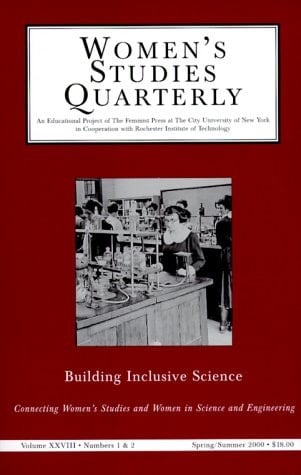
Women have always been scientists, but over the centuries, their contributions have been unrecognized, limited, and thwarted by unequal resources and oppurtunities. While conditions have improved, crucial questions remain: Why do talented women infrequently pursue careers in fields such as computer science and engineering? Does science education privilege an infelxible epistemology that may alienate women? Are the sciences disconnected from contemporary society? How has feminism changed scientific practice? This issue of WSQ broadens the dialogue between women's studies and the sciences, and explores new methods and approaches to reduce the masculine bias in scientific inquiry and science classrooms.<br/>Contributors to this issue come from a broad range of disciplines, representing bioethics, physics, biology, computer science, engineering, and more. Together these teachers, scholars, researchers, and practitioners present the history of women and science, report on the sometimes uneasy participation of women in scientific fields, and offers useful new models for continuing progress in bringing women and science together. With essential research and innovative syllabi, Building Inclusive Science is an invaluable resource.
Page Count:
304
Publication Date:
2000-06-01
ISBN-10:
1558612432
ISBN-13:
9781558612433