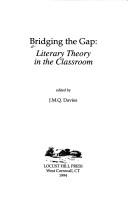
Bridging the Gap
0
0
As an Amazon Associate and affiliate partner, Menrva Books earns from qualifying purchases. Learn more
Author Description
The impact of theory on literary studies at universities has changed the face of the discipline over the past two decades. Inherently interdisciplinary, theory has broadened the context in which literature is now discussed and extended the range of competencies and pedagogic skills the tertiary teacher is called upon to master. In many departments it has created a conceptual generation gap between traditionalists and scholars more at home with theory, which can impact adversely on students' education. Yet it has also created opportunities for exciting curriculum and pedagogic innovation. In these essays American, British, Canadian and Australian scholars, some trained under the old, some under the newer dispensation, seek to bridge this gap by discussing the rewards and difficulties entailed in the theoretically informed teaching of literature. Topics include the empirical validity of theory, the politicization of literary studies, the changing concept of the self or subject, the classroom potential of narratology and Bakhtin's concept of the "threshold," and the importance of African-American and Post-Colonial theory in developing a socially representative curriculum. The volume is intended as a contribution to what is increasingly being recognized as the need for more systematic professional dialogue about the practical pedagogic difficulties the advent of theory has created.
Menrva's Summary
THE THESIS
The advent of literary theory has created a divide within university literary studies, impacting both pedagogy and student education. This collection of essays by international scholars explores the challenges and opportunities presented by this theoretical shift. It aims to bridge the gap between traditionalist and theory-oriented academics by examining the practical pedagogic difficulties and potential innovations arising from theoretically informed teaching. The essays address topics such as the empirical validity of theory, the politicization of literary studies, and the role of specific theoretical frameworks in curriculum development.
THE SCOPE MAP
- Analysis of the impact of literary theory on university-level literary studies over the past two decades.
- Exploration of the interdisciplinary nature of theory and its broadening of literary discussion contexts.
- Discussion of the conceptual generation gap between traditionalists and theory-focused scholars.
- Examination of opportunities for curriculum and pedagogic innovation.
- Contributions from American, British, Canadian, and Australian scholars with diverse theoretical backgrounds.
- Topics including the empirical validity of theory and the politicization of literary studies.
- Consideration of the changing concept of the self or subject in literary analysis.
- The classroom potential of narratology and Bakhtin's concept of the "threshold."
THE AUTHORITY PERSPECTIVE
This volume addresses the significant pedagogical challenges and opportunities arising from the integration of literary theory in university curricula. The essays, contributed by scholars from various national backgrounds and theoretical orientations, aim to foster a dialogue on bridging the gap between traditional and theory-informed approaches to teaching literature. The collection delves into specific theoretical concepts and their classroom application, seeking to provide practical insights for educators navigating these changes. It is intended as a contribution to the ongoing professional discussion about the practical implications of literary theory in higher education.
Page Count:
373
Publication Date:
1994-01-01
ISBN-10:
0933951604
Non-Fiction
Education
Literary Criticism
Community Tags
Similar Books