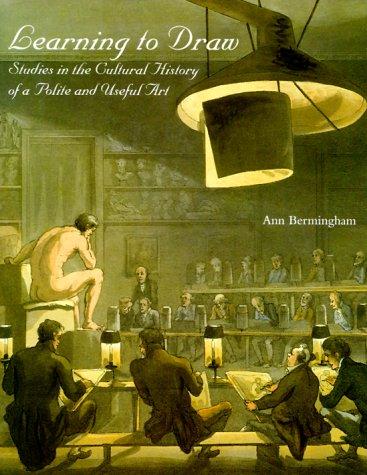
Learning to Draw
0
0
As an Amazon Associate and affiliate partner, Menrva Books earns from qualifying purchases. Learn more
Author Description
This book explores the social and cultural processes that enabled drawing to emerge as an amateur pastime, as well as the meanings that drawing had for people who were not artists. Ann Bermingham shows how the history of drawing in England - from the age of Elizabeth I to the era of early photography - mirrored changes in society, politics, the practical world, and notions of self. This book examines how drawing intersected with a wide range of social phenomena, from political absolutism, writing, empirical science, and Enlightenment pedagogy to nationalism, industrialism, tourism, bourgeois gentility, and religious instruction.
Menrva's Summary
THE THESIS
This book investigates how drawing evolved from a specialized skill into a widespread amateur pursuit and the significance it held for non-artists. Ann Bermingham, drawing on her expertise in art history and social history, examines the period in England from the Elizabethan era to the advent of early photography. The book posits that the history of drawing reflects broader societal shifts, including changes in politics, practical life, and personal identity. It details how drawing became intertwined with diverse social elements such as political structures, scientific advancements, educational theories, national identity, industrialization, and evolving social classes.
THE SCOPE MAP
- The emergence of drawing as an amateur pastime in England.
- The meanings and social functions of drawing for non-artists.
- The intersection of drawing with political, scientific, and educational developments.
- The role of drawing in shaping notions of self, nationalism, and bourgeois gentility.
- The historical trajectory of drawing from the Elizabethan age to the era of early photography.
THE AUTHORITY PERSPECTIVE
This book is regarded as a significant contribution to the understanding of drawing's social and cultural history. Scholars have noted its comprehensive scope, tracing the evolution of drawing practices and their societal implications across several centuries. The work is praised for its interdisciplinary approach, connecting artistic trends with broader historical phenomena. It offers a detailed analysis of how drawing became democratized and what it signified beyond the realm of professional art.
Page Count:
304
Publication Date:
2000-01-01
ISBN-10:
0300080395
Art
History
Non-Fiction
Cultural History
Art History
Social History
Community Tags
Similar Books














