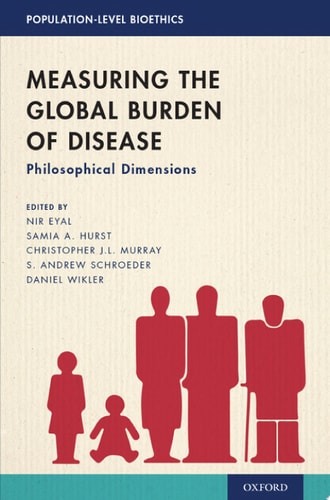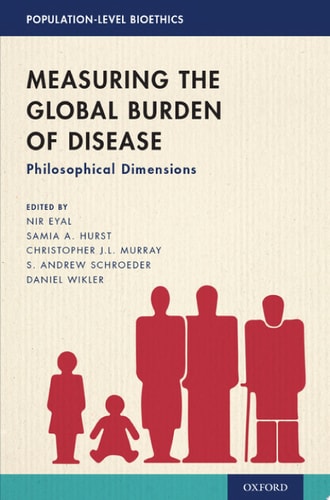
Measuring the Global Burden of Disease: Philosophical Dimensions
0
0
As an Amazon Associate and affiliate partner, Menrva Books earns from qualifying purchases. Learn more
Author Description
The Global Burden of Disease Study (GBD) is one of the largest-scale research collaborations in global health, distilling a wide range of health information to provide estimates and projections for more than 350 diseases, injuries, and risk factors in 195 countries. Its results are a critical tool informing researchers, policy-makers, and others working to promote health around the globe.A study like the GBD is, of course, extremely complex from an empirical perspective. But it also raises a large number of complex ethical and philosophical questions that have been explored in a series of collaborations over the past twenty years among epidemiologists, philosophers, economists, and policy scholars. The essays in this volume address issues of current and urgent concern to the GBD and other epidemiological studies, including rival understandings of causation, the aggregation of complex health data, temporal discounting, age-weighting, and the valuation of health states. The volume concludes with a set of chapters discussing how epidemiological data should and should not be used.Better appreciating the philosophical dimensions of a study like the GBD can make possible a more sophisticated interpretation of its results, and it can improve epidemiological studies in the future, so that they are better suited to produce results that can help us to improve global health.
Menrva's Summary
THE THESIS
This volume investigates the complex ethical and philosophical foundations that underpin the Global Burden of Disease (GBD) study and similar large-scale epidemiological research. The authors, a multidisciplinary group of epidemiologists, philosophers, and economists, argue that empirical data collection is inseparable from normative assumptions. By examining the methodology of health data aggregation, they provide a framework for understanding how philosophical choices influence global health policy and resource allocation.
THE SCOPE MAP
What You Will Find
- Analysis of causation models in epidemiological research
- Ethical evaluation of temporal discounting and age-weighting
- Methodologies for the valuation of diverse health states
- Guidelines for the appropriate application of epidemiological data in policy
Scope Limits
- Does not provide a comprehensive history of the GBD study itself
- Does not offer specific clinical medical advice or treatment protocols
THE AUTHORITY PERSPECTIVE
Experts recognize this text as a critical bridge between quantitative health metrics and normative ethical theory. Readers frequently note the academic density of the prose, which serves as a foundational resource for scholars and policy-makers navigating the intersection of bioethics and public health.
Page Count:
344
Publication Date:
2020-06-02
Publisher:
Oxford University Press
ISBN-10:
0190082542
ISBN-13:
9780190082543
Philosophy
Economics
Public Policy
Global Health
Epidemiology
Bioethics
Community Tags
Similar Books