Author Description
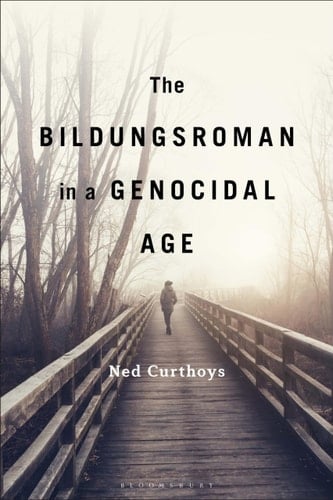
<p><i>The Bildungsroman in a Genocidal Age</i> argues that the humanist ideal of <i>Bildung</i>, the cultivation of the potentialities of the self through self-reflection, travel, and varied social intercourse, has been revitalized in an age of genocidal violence. It examines the <i>Bildungsroman </i>as a flourishing intermedial genre encompassing contemporary historical fiction, historical feature films, and children's and YA literature. Analysing a number of highly influential novels and films about the Holocaust and World War II (WWII), the book argues that the narrative strategies of the <i>Bildungsroman</i>, which includes a swerve away from 'home' and its parochialism and moral certainties, has contributed to shaping audience perceptions of traumatic histories and their ethical implications in the twenty-first century. <br><br><i>The Bildungsroman in a Genocidal Age </i>examines some of the most keenly discussed, and controversial historical fictions of recent decades including <i>The Remains of the Day </i>(1989), <i>The Kindly Ones </i>(2006, English trans. 2009), <i>The Boy in the Striped Pyjamas </i>(2006), and Margarethe von Trotta's biopic <i>Hannah Arendt </i>(2012). It argues that in portraying a protagonist who defers or refuses a prescribed social destiny, these novels and films are sensitive to the 'Eichmann problematic' of the 'banality of evil' as formulated by Hannah Arendt. These <i>Bildungsromane</i>, the study suggests, are designed to address the problem of the social reproduction of normative, unimaginative, and conformist mindsets that can enable totalitarian politics and genocidal policies.</p>
Page Count:
168
Publication Date:
2025-08-21
ISBN-13:
9798765103883