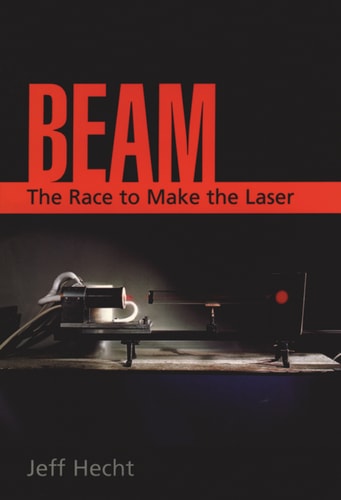
Beam: The Race to Make the Laser
0
0
As an Amazon Associate and affiliate partner, Menrva Books earns from qualifying purchases. Learn more
Author Description
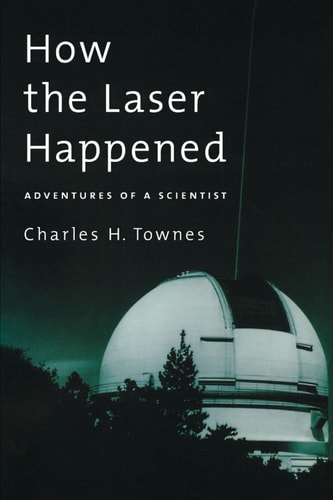
Beam is the story of the race to make the laser, the three intense years from the birth of the laser idea to its breakthrough demonstration in a California laboratory. The quest was a struggle against physics, established wisdom, and the establishment itself. In 1954, Charles Townes invented the laser's microwave cousin, the maser. The next logical step was to extend the same physical principles to the shorter wavelengths of light, but the idea did not catch fire until October 1957, when Townes asked Gordon Gould about Gould's research on using light to excite thallium atoms. Each took the idea and ran with it. The independent-minded Gould sought the fortune of an independent inventor; the professorial Townes sought the fame of scientific recognition. Townes enlisted the help of his brother-in-law, Arthur Schawlow, and got Bell Labs into the race. Gould turned his ideas into a patent borth ation and a million-dollar defense contract. They soon had company. Ali Javan, one of Townes's former students, began pulling 90-hour weeks at Bell Labs with colleague Bill Bennett. And far away in California a bright young physicist named Ted Maiman became a very dark horse in the race. While Schawlow proclaimed that ruby could never make a laser, Maiman slowly convinced himself it would. As others struggled with recalcitrant equipment and military secrecy, Maiman built a tiny and elegant device that fit in the palm of his hand. His ruby laser worked the first time he tried it, on May 16, 1960, but afterwards he had to battle for acceptance as the man who made the first laser. Beam is a fascinating tale of a remarkable and powerful invention that has become a symbol of modern technology.
Menrva's Summary
THE THESIS
This book investigates the intense, multi-year scientific race to develop the first functional laser, examining the collision of ego, intellectual property, and physics. Jeff Hecht, a veteran science writer, utilizes primary source interviews and historical records to document the competition between academic giants and independent inventors. The narrative framework focuses on the transition from the maser to the optical laser, highlighting the specific technical hurdles and institutional pressures faced by the key participants.
THE SCOPE MAP
What You Will Find
- Detailed accounts of the competition between Charles Townes, Gordon Gould, and Ted Maiman.
- Technical explanations of the shift from microwave to optical wavelength research.
- Documentation of patent disputes and the influence of military funding on scientific progress.
Scope Limits
- The text does not provide a comprehensive history of laser applications post-1960.
- It does not delve into the complex quantum mechanics beyond the level required to understand the race itself.
THE AUTHORITY PERSPECTIVE
Experts and historians of science frequently cite this work as the definitive account of the laser's invention due to its meticulous research and balanced portrayal of the competing inventors. Readers often note that the prose remains accessible to non-specialists while maintaining the technical rigor expected of a historical scientific study.
Page Count:
284
Publication Date:
2005-01-01
Publisher:
Oxford University Press
ISBN-10:
019020754X
ISBN-13:
9780190207540
Biography
Science
Physics
Lasers & Photonics
Trades & Technology
Earth Sciences
Technology & Engineering
Technology history
Innovation
Lasers
Community Tags
Other Editions(3)
Similar Books



Reader Comments
Share Your Thoughts
No comments yet. Be the first to share your thoughts!