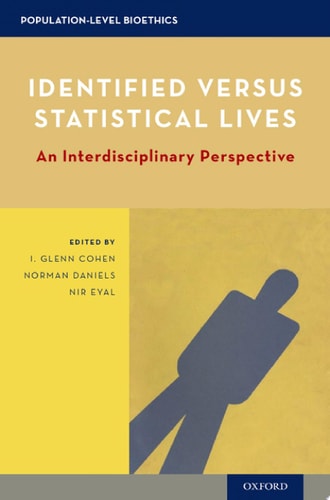
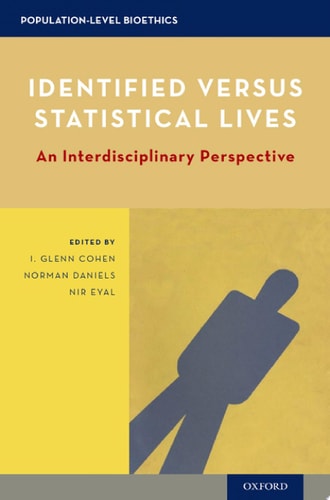
Identified Versus Statistical Lives: An Interdisciplinary Perspective
0
0
As an Amazon Associate and affiliate partner, Menrva Books earns from qualifying purchases. Learn more
Author Description
The Identified Lives Effect Describes The Fact That People Demonstrate A Stronger Inclination To Assist Persons And Groups Identified As At High Risk Of Great Harm Than Those Who Will Or Already Suffer Similar Harm, But Endure Unidentified. As A Result Of This Effect, We Allocate Resources Reactively Rather Than Proactively, Prioritizing Treatment Over Prevention. For Example, During The August 2010 Gold Mine Cave-in In Chile, Where Ten To Twenty Million Dollars Was Spent By The Chilean Government To Rescue The 33 Miners Trapped Underground. Rather Than Address The Many, More Cost Effective Mine Safety Measures That Should Have Been Implemented, The Chilean Government And International Donors Concentrated Efforts In Large-scale Missions That Concerned Only The Specific Group. Such Bias As Illustrated Through This Incident Raises Practical And Ethical Questions That Extend To Almost Every Aspect Of Human Life And Politics. What Can Social And Cognitive Sciences Teach Us About The Origin And Triggers Of The Effect? Philosophically And Ethically, Is The Effect A Bias To Be Eliminated Or Is It Morally Justified? What Implications Does The Effect Have For Health Care, Law, The Environment And Other Practice Domains? This Volume Is The First To Take An Interdisciplinary Approach Toward Answering This Issue Of Identified Versus Statistical Lives By Considering A Variety Of Perspectives From Psychology, Public Health, Law, Ethics, And Public Policy.
Menrva's Summary
THE THESIS
This volume investigates the ethical and practical implications of the 'identified lives effect,' a cognitive bias where individuals and institutions prioritize aid for specific, identifiable victims over larger groups of anonymous people facing similar risks. The authors, including experts in law, bioethics, and philosophy, synthesize research from psychology, public health, and public policy to determine whether this bias is a moral failing to be corrected or a justifiable human impulse. By examining the tension between reactive rescue efforts and proactive prevention, the text provides a framework for evaluating resource allocation in medicine, environmental policy, and governance.
THE SCOPE MAP
What You Will Find
- Analysis of the psychological origins and cognitive triggers of the identified lives effect
- Ethical arguments regarding the moral status of statistical versus identified victims
- Case studies applying the effect to health care, mine safety, and international aid
- Interdisciplinary perspectives from law, philosophy, and public policy
Scope Limits
- Does not provide a singular policy solution for all resource allocation problems
- Does not focus on individual clinical psychology outside the context of public decision-making
THE AUTHORITY PERSPECTIVE
Experts recognize this volume as a foundational interdisciplinary text for those studying the intersection of behavioral economics and public ethics. Readers frequently note the academic density of the prose, which is well-suited for scholars and policy practitioners interested in the mechanics of institutional decision-making.
Page Count:
288
Publication Date:
2015-01-01
Publisher:
Oxford University Press, Incorporated
ISBN-10:
0190217499
ISBN-13:
9780190217495
Philosophy
Psychology
Ethics
Medical policy
Social Science
Public Policy
Public Health
Law
Empathy
Community Tags
Other Editions(2)
Similar Books