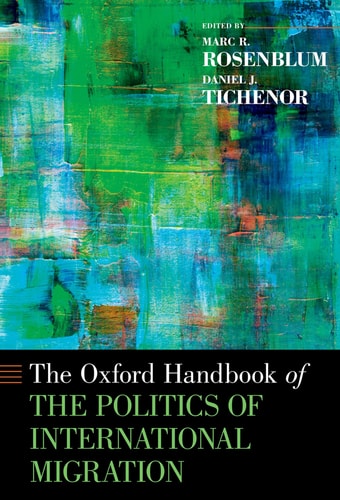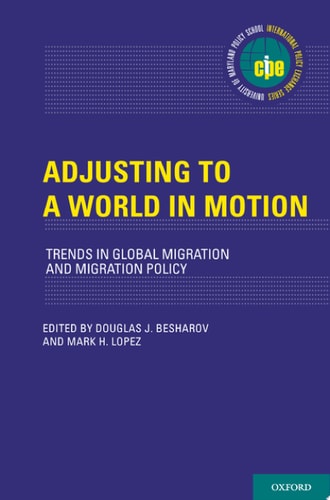
Adjusting to a World in Motion: Trends in Global Migration and Migration Policy
0
0
As an Amazon Associate and affiliate partner, Menrva Books earns from qualifying purchases. Learn more
Author Description
International migration has reached new heights since the 1960s. Altogether, some 215 million people live in countries other than their countries of birth, and according to surveys, another 700 million say they would leave their homes and move to another country if they could. Nations-both sending and receiving-have responded to this growing international migrant flow with new laws and domestic programs. In receiving countries, they include laws and programs to control entry, encourage high-skilled immigration, develop refugee policy, and speed assimilation. In sending countries, governments are implementing and experimenting with new policies that link migrant diasporas back to their home countries culturally or economically-or both.This volume contains a series of thoughtful analyses of some of the most critical issues raised in both receiving and sending countries, including US immigration policy, European high skilled labor programs, the experiences of migrants to the Gulf States, the impact of immigration on student educational achievement, and how post-conflict nations connect with their diasporas. This volume will help readers draw lessons for their own countries, and is thus offered in the spirit of mutual learning within a continued international dialogue of research and analysis on migration.
Menrva's Summary
THE THESIS
This volume investigates the complex intersection of global migration trends and the subsequent policy responses implemented by both sending and receiving nations. Editors Douglas J. Besharov and Mark H. Lopez compile a series of expert analyses that examine how governments manage the movement of people, the integration of migrants, and the maintenance of ties with diasporas. The work utilizes a comparative framework to evaluate the efficacy of various national strategies in a world where migration has reached historically high levels.
THE SCOPE MAP
What You Will Find
- Comparative analysis of US immigration policy and European high-skilled labor programs
- Examination of migrant experiences in the Gulf States
- Assessment of the impact of immigration on student educational achievement
- Case studies on how post-conflict nations engage with their diaspora populations
Scope Limits
- The text does not provide a comprehensive global history of migration prior to the 1960s
- It does not offer specific legislative recommendations for individual nations, focusing instead on comparative research and mutual learning
THE AUTHORITY PERSPECTIVE
Experts and researchers in the field of international policy view this volume as a useful resource for understanding the diverse mechanisms nations use to manage migration flows. Readers frequently note the academic density of the prose, which makes it a suitable reference for students and policymakers interested in comparative migration studies.
Page Count:
440
Publication Date:
2016-01-14
Publisher:
Oxford University Press
ISBN-10:
0190211393
ISBN-13:
9780190211394
Economics
Public Policy
International relations
Sociology
Immigrants
Migration Studies
Community Tags
Similar Books