Author Description
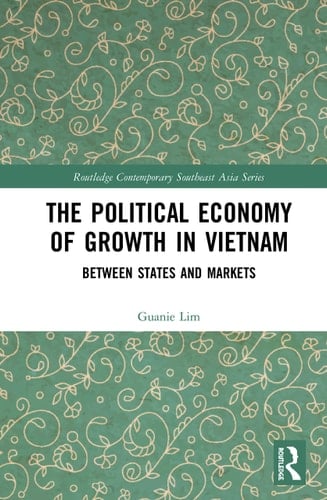
<p>Since the <i>doi moi</i> reforms in 1986, Vietnam has experienced a dramatic socioeconomic</p> <p>transformation. Lim examines the role of the state and its interaction</p> <p>with market forces in bringing this change about.</p> <p>Taking the motorcycle and banking industries as case studies, this book explores</p> <p>the dynamics between the state and transnational corporations in shaping</p> <p>the manufacturing and service sectors, respectively. Vietnam, as one of Southeast</p> <p>Asia's quintessential latecomer economies with little prior experience of</p> <p>dealing with transnational corporations, has nevertheless been quite successful</p> <p>in maintaining some control over the impact of foreign direct investment. Yet,</p> <p>the learning outcomes remain highly uneven. In addition, Lim argues that Vietnamese</p> <p>advancement in both industries mirrors only partially the more generalized</p> <p>patterns of state-led development in East Asia's earlier batch of latecomer</p> <p>economies. Vietnam's case thus presents practical lessons on how to succeed</p> <p>in crafting and utilizing policy instruments to achieve domestic economic and</p> <p>technological upgrading.</p> <p>This book will be of great interest to scholars of political economy and industrial</p> <p>policy in East Asia, as well as to scholars and policy professionals analyzing</p> <p>approaches to development strategy more broadly.</p>
Page Count:
108
Publication Date:
2021-01-01
ISBN-10:
0367333864
ISBN-13:
9780367333867