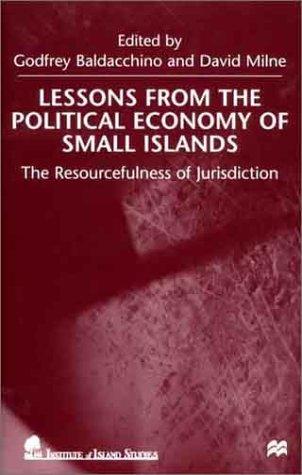
Lessons from the Political Economy of Small Islands
0
0
As an Amazon Associate and affiliate partner, Menrva Books earns from qualifying purchases. Learn more
Author Description
The book focuses on the experience of six North Atlantic, cold-water islands boasting distinct constitutional arrangements. These range from full sovereignty (Iceland), to federation (Prince Edward Island; Newfoundland and Labrador), to federacy or home rule status (Faroe Islands; Isle of Man; Aland Island). It explores how different constitutional, political and cultural features of these islands are deployed in strategic economic thinking and planning, leading these jurisdictions to craft a real 'political economy'. The comparative interplay of economic and juridical resources is taken up in relation to four major economic domains; the primary sector; small-scale manufacturing; export of knowledge-based services and tourism, in the outcome, practical 'best practice' proposals are suggested. The book shows the 'gift of jurisdiction' as a strategy enabler, with law and public policy serving as the fuel for development in a decentralizing globalized world offering loopholes or special arrangements to exploit.
Menrva's Summary
THE THESIS
This book investigates how small North Atlantic islands leverage their unique constitutional and political structures to develop distinct economic strategies. The author, Godfrey Baldacchino, examines six islands with varying degrees of sovereignty, including Iceland, Prince Edward Island, Newfoundland and Labrador, the Faroe Islands, the Isle of Man, and the Åland Islands. It analyzes how their specific political, cultural, and juridical resources are integrated into economic planning across sectors like primary industries, manufacturing, knowledge-based services, and tourism. The core argument posits that 'jurisdiction' itself acts as a strategic enabler, with law and public policy serving as critical drivers for development in a globalized world that offers opportunities for specialized arrangements.
THE SCOPE MAP
- Analysis of six North Atlantic, cold-water islands with diverse constitutional arrangements.
- Comparison of economic strategies in Iceland (sovereignty), Prince Edward Island and Newfoundland and Labrador (federation), and the Faroe Islands, Isle of Man, and Åland Islands (federacy/home rule).
- Exploration of the interplay between economic and juridical resources.
- Detailed examination of four major economic domains: the primary sector, small-scale manufacturing, export of knowledge-based services, and tourism.
- Identification of 'best practice' proposals for economic development.
- Discussion of 'the gift of jurisdiction' as a strategy enabler.
- Focus on how law and public policy fuel development in a decentralizing globalized world.
THE AUTHORITY PERSPECTIVE
The book offers a comparative analysis of small island economies, focusing on how their unique political and constitutional frameworks shape their economic strategies. It highlights the concept of 'jurisdiction' as a key enabler for development, suggesting that tailored legal and policy approaches can be exploited in a globalized context. The work is likely to appeal to scholars and policymakers interested in island studies, political economy, and regional development. Its comparative approach provides practical insights into how distinct governance structures can foster economic growth.
Page Count:
303
Publication Date:
2000-01-01
ISBN-10:
0312231954
ISBN-13:
9780312231958
Economics
Politics
History
Non-Fiction
Public Policy
Island Studies
Comparative Politics
Community Tags
Similar Books