Author Description
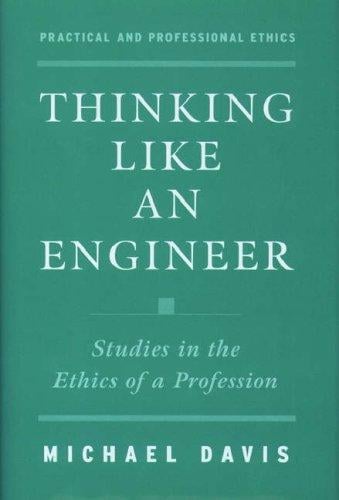
Davis asks, in effect, two basic questions: What is engineering? and, What ethical principles should guide engineers? In Part I he puts engineering in historical perspective, making clear both how new engineering is and in what that newness consists. He then offers an extended meditation on the Challenger space shuttle disaster. In Part II he considers aspects of the complex relationship between engineering ideals and practice today, looking at the place of a code of ethics in engineering practice, the origins of wrongdoing, and whistleblowing and its alternatives. Here, Davis details how social organization and technical requirements combine to define how engineers should (and presumably do) think. Part III explores the importance of protecting engineering judgment and identifies the chief means of doing so. In Part IV, Davis begins to test this philosophical construction empirically. He reports the results of a study of how engineers and managers work together in ten companies. He then illuminates the concept of professional autonomy in such a way that social scientists should be able to assess the degree of professional autonomy engineers have. The book's concluding chapter reviews the social science literature, identifying empirical questions whose answers would be of value to engineering ethics.
Page Count:
240
Publication Date:
1998-01-01
ISBN-10:
058524569X