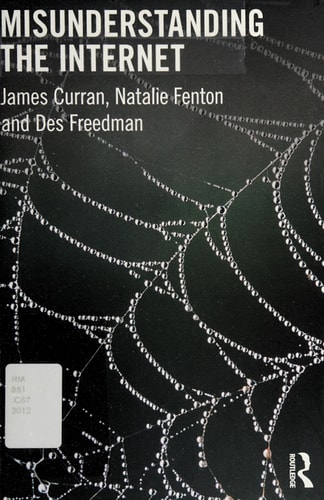
Misunderstanding the Internet
0
0
As an Amazon Associate and affiliate partner, Menrva Books earns from qualifying purchases. Learn more
Author Description
The Growth Of The Internet Has Been Spectacular. There Are Now More 1.5 Billion Internet Users Across The Globe, About One Quarter Of The World's Population. This Is Certainly A New Phenomenon That Is Of Enormous Significance For The Economic, Political And Social Life Of Contemporary Societies. However, Much Popular And Academic Writing About The Internet Takes A Technologically Deterministic View, Assuming That The Internet' Potential Will Be Realised In Essentially Transformative Ways. This Was Especially True In The Euphoric Moment Of The Mid-1990s, When Many Commentators Wrote About The Internet With Awe And Wonderment. While This Moment May Be Over, Its Underlying Technocentrism -- The Belief That Technology Determines Outcomes -- Lingers On, And With It, A Failure To Understand The Internet In Its Social, Economic And Political Context. Misunderstanding The Internet Is A Short Introduction, Encompassing The History, Sociology, Politics And Economics Of The Internet And Its Impact On Society. The Book Has A Simple Three Part Structure: Part 1 Looks At The History Of The Internet, And Offers An Overview Of The Internet's Place In Society; Part 2 Focuses On The Control And Economics Of The Internet; Part 3 Examines The Internet's Political And Cultural Influence. Misunderstanding The Internet Is A Polemical, Sociologically And Historically Informed Textbook That Aims To Challenge Both Popular Myths And Existing Academic Orthodoxies Around The Internet.
Menrva's Summary
THE THESIS
This book investigates the pervasive influence of technological determinism in contemporary discourse, arguing that the internet must be understood through its specific social, economic, and political contexts rather than as an autonomous force. James Curran, along with contributors Des Freedman and Natalie Fenton, utilizes a sociologically and historically informed framework to dismantle popular myths surrounding digital transformation. By examining the structural realities of internet control and influence, the authors challenge existing academic orthodoxies that prioritize technological potential over material outcomes.
THE SCOPE MAP
What You Will Find
- A historical overview of the internet's development and its integration into modern society.
- An analysis of the political economy of the web, including the decline of traditional economic models.
- Examination of power dynamics, social networking, and the role of the internet in radical politics.
- A critical assessment of internet regulation and the outsourcing of digital governance.
THE AUTHORITY PERSPECTIVE
Experts and academics frequently cite this work as a critical, polemical intervention against techno-optimism in media studies. Readers often note the text's accessibility as an introductory resource that effectively balances historical context with contemporary political analysis.
Page Count:
208
Publication Date:
2012-01-01
Publisher:
Routledge
ISBN-10:
0203146484
ISBN-13:
9780203146484
Psychology
History
Economics
Politics
Social networking
Social Aspects
Technology
Media Studies
Internet
Sociology
Political Aspects
Community Tags
Similar Books