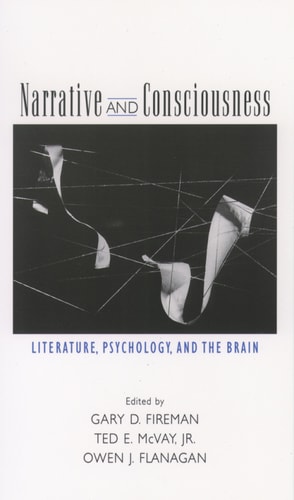
Narrative and Consciousness: Literature, Psychology and the Brain
0
0
As an Amazon Associate and affiliate partner, Menrva Books earns from qualifying purchases. Learn more
Author Description
We define our conscious experience by constructing narratives about ourselves and the people with whom we interact. Narrative pervades our lives--conscious experience is not merely linked to the number and variety of personal stories we construct with each other within a cultural frame, but is subsumed by them. The claim, however, that narrative constructions are essential to conscious experience is not useful or informative unless we can also begin to provide a distinct, organized, and empirically consistent explanation for narrative in relation to consciousness. Understanding the role of narrative in determining individual and collective consciousness has been elusive from within traditional academic frameworks. This volume argues that addressing so broad and complex a problem requires an examination from outside our insular disciplinary framework. Such an open examination would be informed by the inquiries and approaches of multiple disciplines. Recognition of the different approaches to examining personal stories will allow for the coordination of how narrative seems (its phenomenology), with what mental labor it does (its psychology), and how it is realized (its neurobiology). Only by overcoming the boundaries erected by multiple theoretical and discursive traditions can we begin to comprehend the nature and function of narrative in consciousness. Narrative and Consciousness brings together essays by exceptional scholars and scientists in the disciplines of literary theory, psychology, and neuroscience to examine how stories are constructed, how stories structure lived experience, and how stories are rooted in material reality (the human body). The specific topics addressed include narrative in the development of conscious awareness; autobiographical narrative, fiction and the construction of self; trauma and narrative disruptions; narrative, memory and identity; and the physiological and neural substrate of narrative.
Menrva's Summary
THE THESIS
This volume investigates the fundamental question of how narrative constructions function as essential components of human conscious experience. The editors, Gary D. Fireman, Owen J. Flanagan, and Ted E. McVay, assemble a multidisciplinary team of scholars to bridge the gap between literary theory, psychology, and neuroscience. By synthesizing these disparate fields, the text argues that consciousness is not merely linked to personal storytelling but is actively shaped and subsumed by the narratives individuals construct within cultural frameworks.
THE SCOPE MAP
What You Will Find
- Analysis of the role of narrative in the development of conscious awareness
- Examination of autobiographical memory and the construction of the self
- Exploration of the physiological and neural substrates of narrative processing
- Discussion on trauma and its impact on narrative continuity
Scope Limits
- The text does not provide a singular, unified theory of consciousness
- It does not focus on clinical therapeutic applications for narrative therapy
THE AUTHORITY PERSPECTIVE
Experts recognize this volume as a significant interdisciplinary effort to reconcile phenomenological experience with biological reality. Readers frequently note the academic density of the prose, which requires familiarity with both cognitive science and literary criticism to fully grasp the arguments presented.
Page Count:
264
Publication Date:
2003-01-01
Publisher:
Oxford University Press
ISBN-10:
0190289821
ISBN-13:
9780190289829
Psychology
Consciousness
Literary theory
Medical
English
Allied Health
Neuroscience
Philosophy of
Linguistics
English & College Success
Community Tags
Similar Books



Reader Comments
Share Your Thoughts
No comments yet. Be the first to share your thoughts!