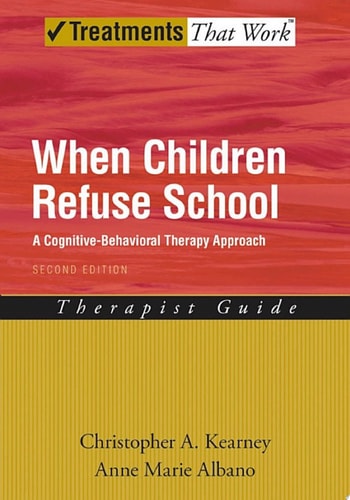
When Children Refuse School: A Cognitive-Behavioral Therapy Approach
0
0
As an Amazon Associate and affiliate partner, Menrva Books earns from qualifying purchases. Learn more
Author Description
Many children and teenagers refuse to attend school or have anxiety-related difficulties remaining in classes for an entire day. School refusal behavior can contribute to a child's academic, social, and psychological problems, impact a child's chances for future educational, financial, and personal success, and significantly affect family functioning. Cognitive Behavioral Therapy (CBT) has been shown to be a highly effective treatment for youth who exhibit this behavior.This Therapist Guide outlines four treatment protocols based on CBT principles that can be used to effectively address the main types of school refusal behavior. The Guide concentrates on four primary reasons why children typically refuse school to relieve school-related distress, to avoid negative social or evaluative situations at school, to receive attention from a parent or a significant other, and to obtain tangible rewards outside of schoolThis manual includes tools for assessing a child's reasons for school refusal behavior and is based on a functional, prescriptive model. It presents well-tested techniques arranged by function to tailor treatment to a child's particular characteristics. Each treatment package also contains a detailed discussion of special topics pertinent to treating youths with school refusal behavior, such as medication, panic attacks, and being teased. A corresponding workbook is also available for parents, who often play an important part in a child's recovery. This comprehensive program is an invaluable resource for clinicians treating school refusal behavior.
Menrva's Summary
THE THESIS
This guide investigates the clinical application of Cognitive Behavioral Therapy (CBT) to address the multifaceted problem of school refusal behavior in children and adolescents. Authors Anne Marie Albano and Christopher A. Kearney, both established experts in child psychology, present a functional, prescriptive model designed to identify the underlying motivations for school avoidance. By categorizing refusal behaviors into four distinct functional domains, the authors provide a structured framework that allows clinicians to tailor interventions to the specific psychological needs of the youth.
THE SCOPE MAP
What You Will Find
- Four distinct CBT-based treatment protocols categorized by the function of the refusal behavior
- Assessment tools for identifying the primary drivers of school-related anxiety
- Clinical strategies for addressing comorbid issues such as panic attacks and social teasing
- Guidance on integrating parental involvement into the recovery process
Scope Limits
- The text focuses specifically on CBT interventions and does not provide an exhaustive review of alternative therapeutic modalities
- The manual is intended for professional clinicians and may require specialized training to implement effectively
THE AUTHORITY PERSPECTIVE
Clinicians and mental health professionals frequently cite this work as a foundational resource for treating school-based anxiety disorders. Experts highlight the manual's practical utility and the clarity of its functional assessment model for practitioners working in school or clinical settings.
Page Count:
280
Publication Date:
2007-01-01
Publisher:
Oxford University Press
ISBN-10:
0190294752
ISBN-13:
9780190294755
Psychology
Mental Health
Psychotherapy
Education
Behavioral Therapy
Community Tags
Similar Books