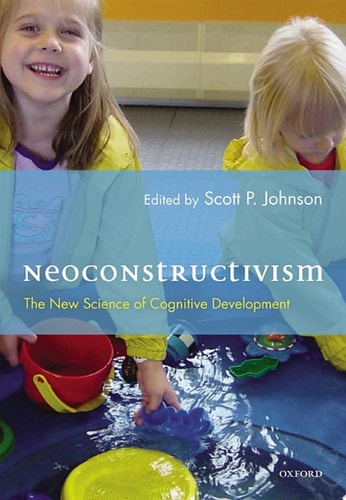
Neoconstructivism: The New Science of Cognitive Development
0
0
As an Amazon Associate and affiliate partner, Menrva Books earns from qualifying purchases. Learn more
Author Description
Arguments over the developmental origins of human knowledge are ancient, founded in the writings of Plato, Aristotle, Descartes, Hume, and Kant. They have also persisted long enough to become a core area of inquiry in cognitive and developmental science. Empirical contributions to these debates, however, appeared only in the last century, when Jean Piaget offered the first viable theory of knowledge acquisition that centered on the great themes discussed by Kant: object, space, time, and causality. The essence of Piaget's theory is constructivism: The building of concepts from simpler perceptual and cognitive precursors, in particular from experience gained through manual behaviors and observation.The constructivist view was disputed by a generation of researchers dedicated to the idea of the "competent infant," endowed with knowledge (say, of permanent objects) that emerged prior to facile manual behaviors. Taking this possibility further, it has been proposed that many fundamental cognitive mechanisms -- reasoning, event prediction, decision-making, hypothesis testing, and deduction -- operate independently of all experience, and are, in this sense, innate. The competent-infant view has an intuitive appeal, attested to by its widespread popularity, and it enjoys a kind of parsimony: It avoids the supposed philosophical pitfall posed by having to account for novel forms of knowledge in inductive learners. But this view leaves unaddressed a vital challenge: to understand the mechanisms by which new knowledge arises.This challenge has now been met. The neoconstructivist approach is rooted in Piaget's constructivist emphasis on developmental mechanisms, yet also reflects modern advances in our understanding of learning mechanisms, cortical development, and modeling. This book brings together, for the first time, theoretical views that embrace computational models and developmental neurobiology, and emphasize the interplay of time, experience, and cortical architecture
Menrva's Summary
THE THESIS
This book investigates the mechanisms by which human knowledge arises, proposing a neoconstructivist framework that reconciles Piagetian constructivism with modern insights into cortical development and computational modeling. Scott Johnson, a researcher in developmental science, synthesizes historical philosophical debates with contemporary empirical data. He argues that cognitive development is not merely a product of innate mechanisms or simple experience, but an interplay of time, environmental interaction, and biological architecture.
THE SCOPE MAP
What You Will Find
- Integration of computational models with developmental neurobiology
- Analysis of the transition from Piagetian theory to modern neoconstructivism
- Examination of how cortical architecture influences learning mechanisms
Scope Limits
- Does not provide a comprehensive history of all developmental psychology theories
- Does not focus on clinical applications or therapeutic interventions for developmental disorders
THE AUTHORITY PERSPECTIVE
Experts identify this text as a significant synthesis for those studying the intersection of neurobiology and cognitive development. Readers frequently note the academic density of the prose, which is intended for students and researchers in the field of cognitive science.
Page Count:
372
Publication Date:
2009-01-01
Publisher:
Oxford University Press
ISBN-10:
0190450207
ISBN-13:
9780190450205
Science
Psychology
Neuroscience
Developmental Psychology
Community Tags
Similar Books