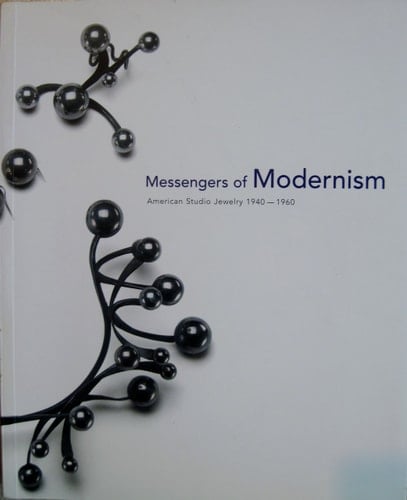
Messengers of Modernism American Studio Jewelry 1940-1960
0
0
Author Description
Essentially a post-World War II development, the American modernist jewelry movement was a natural outgrowth of the ongoing craft revival in the twentieth century. The studio jewelers, like the Arts and Crafts practitioners before them, rejected the machine and the principles of mass production. In this beautifully designed and lavishly illustrated book, Toni Greenbaum analyzes the output of American modernist jewelers, many of whom, such as Alexander Calder and Harry Bertoia, began as sculptors or painters. In their metal-working skills many of these artists were self-taught and evolved new techniques. This jewelry rejected expensive precious stones in favor of cheaper, irregular gems, and even glass, pebbles and shards of pottery. The influence of Surrealism, Cubism, Constructivism, and Abstract Expressionism led these artists to explore representations of space an individual perception in ways which challenged the traditions of earlier jewelry production. From the 1940s through the 1950s, American modernist jewelry was a major force in the decorative arts. As diverse in their appearance as the men and women who created them, these necklaces, rings, bracelets, and brooches subscribed to one overriding precept - the ornamental interpretation of modern art using the body as a point of reference. American Modernist jewelry, likt the writings of the Beat Generation authors, offered art on the most personal level. It served as emblems for art-loving humanists in an age of alienation. The ninety pieces in this book are thus truly messengers of Modernism.
Page Count:
167
Publication Date:
1996-01-01
ISBN-10:
2080135929
ISBN-13:
9782080135926