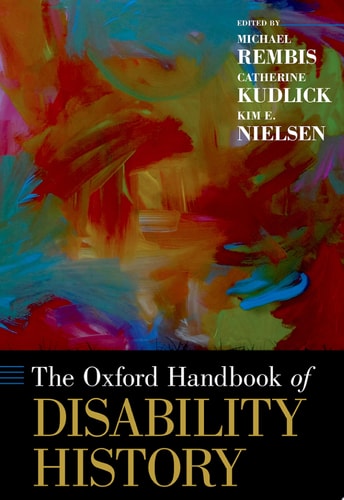
The Oxford Handbook of Disability History
0
0
As an Amazon Associate and affiliate partner, Menrva Books earns from qualifying purchases. Learn more
Author Description
Disability history exists outside of the institutions, healers, and treatments it often brings to mind. It is a history where the disabled live not just as patients or cure-seekers, but rather as people living differently in the world--and it is also a history that helps define the fundamental concepts of identity, community, citizenship, and normality.The Oxford Handbook of Disability History is the first volume of its kind to represent this history and its global scale, from ancient Greece to British West Africa. The twenty-seven articles, written by thirty experts from across the field, capture the diversity and liveliness of this emerging scholarship. Whether discussing disability in modern Chinese cinema or on the American antebellum stage, this collection provides new and valuable insights into the rich and varied lives of the disabled across time and place.
Menrva's Summary
THE THESIS
This volume investigates the evolution of disability as a historical category, arguing that disability is a central, rather than peripheral, component of human identity, citizenship, and social organization. The editors, Catherine J. Kudlick, Kim E. Nielsen, and Michael A. Rembis, are established scholars in the field of disability studies who have curated a collection of twenty-seven essays. By synthesizing global perspectives, the authors challenge traditional medicalized narratives and demonstrate how disability history informs broader understandings of normality and community across diverse cultural contexts.
THE SCOPE MAP
What You Will Find
- A global historical survey spanning from ancient Greece to British West Africa.
- Analysis of disability representation in modern Chinese cinema and the American antebellum stage.
- Scholarly examination of identity formation, citizenship, and social policy.
Scope Limits
- The text does not provide a comprehensive clinical or medical history of specific impairments.
- It does not focus on contemporary legislative advocacy or current policy debates.
THE AUTHORITY PERSPECTIVE
Experts recognize this volume as a foundational reference for the field of disability history due to its breadth and interdisciplinary approach. Readers frequently note the academic density of the prose, which serves as a primary resource for researchers and students of history.
Page Count:
552
Publication Date:
2017-01-01
Publisher:
Oxford University Press
ISBN-10:
0190611316
ISBN-13:
9780190611316
History
People with Disabilities
Social Science
Medical
Special Topics
Academic
Allied Health
Cultural History
Community Tags
Other Editions(2)
Similar Books