Author Description
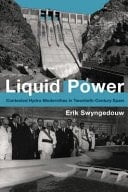
<p><b>An examination of the central role of water politics and engineering in Spain's modernization, illustrating water's part in forging, maintaining, and transforming social power.</b></p> <p>In this book, Erik Swyngedouw explores how water becomes part of the tumultuous processes of modernization and development. Using the experience of Spain as a lens to view the interplay of modernity and environmental transformation, Swyngedouw shows that every political project is also an environmental project.</p> <p>In 1898, Spain lost its last overseas colony, triggering a period of post-imperialist turmoil still referred to as <i>El Disastre</i>. Turning inward, the nation embarked on "regeneration" and modernization. Water played a central role in this; during a turbulent period from the twentieth century into the twenty-first--through the Franco years and into the new era of liberal democracy--Spain's waterscapes were completely transformed, with large-scale projects that ranged from dam construction to irrigation to desalinization. Swyngedouw describes the contested political-ecological process that marked this transformation, showing that the Spain's diverse and contested paths to modernization were predicated on particular trajectories of environmental transformation.</p> <p>After laying out his theoretical perspectives, Swyngedouw analyzes three periods of Spain's political-ecological modernization: the aspirations and stalled modernization of the early twentieth century; the accelerated efforts under the authoritarian Franco regime--which included six hundred dams, expanded hydroelectricity, and massive irrigation; and the changing hydro-social landscape under social democracy. Offering an innovative perspective on the relationship of nature and society, <i>Liquid Power</i> illuminates the political nature of nature.</p>
Page Count:
301
Publication Date:
2015-01-01
ISBN-10:
0262326957
ISBN-13:
9780262326957