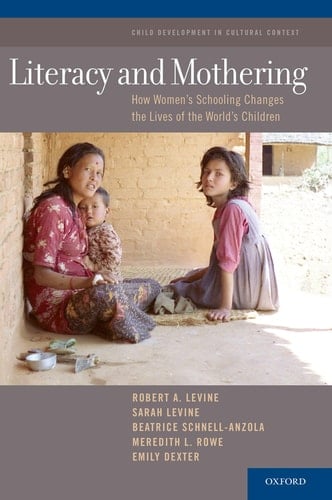
Literacy and Mothering: How Women's Schooling Changes the Lives of the World's Children
0
0
Author Description
Women's schooling is strongly related to child survival and other outcomes beneficial to children throughout the developing world, but the reasons behind these statistical connections have been unclear. In Literacy and Mothering, the authors show, for the first time, how communicative change plays a key role: Girls acquire academic literacy skills, even in low-quality schools, which enable them, as mothers, to understand public health messages in the mass media and to navigate bureaucratic health services effectively, reducing risks to their children's health. With the acquisition of academic literacy, their health literacy and health navigation skills are enhanced, thereby reducing risks to children and altering interactions between mother and child. Assessments of these maternal skills in four diverse countries - Mexico, Nepal, Venezuela, and Zambia - support this model and are presented in the book.Chapter 1 provides a brief history of mass schooling, including the development of a bureaucratic Western form of schooling. Along with the bureaucratic organization of healthcare services and other institutions, this form of mass schooling spread across the globe, setting new standards for effective communication - standards that are, in effect, taught in school. Chapter 2 reviews the demographic and epidemiological evidence concerning the effects of mothers' education on survival, health, and fertility. In this chapter, the authors propose a model that shows how women's schooling, together with urbanization and changes in income and social status, reduce child mortality and improve health. In Chapter 3, the authors examine the concept of literacy and discuss how its meanings and measurements have been changed by educational research of the last few decades. Chapter 4 introduces the four-country study of maternal literacy. Chapters 5, 6, and 7 present the findings, focusing on academic literacy and its retention (Chapter 5), its impact on maternal health literacy and
Menrva's Summary
THE THESIS
This book investigates the causal mechanisms linking maternal schooling to improved child survival and health outcomes in developing nations. The authors, a multidisciplinary team of researchers, argue that academic literacy acquired through schooling functions as a cognitive tool that enables mothers to decode public health information and navigate complex bureaucratic healthcare systems more effectively. By synthesizing demographic data with cross-cultural field research, they propose a model where communicative competence serves as the primary mediator between formal education and reduced child mortality.
THE SCOPE MAP
What You Will Find
- A comparative analysis of maternal literacy across Mexico, Nepal, Venezuela, and Zambia.
- A theoretical framework connecting Western-style bureaucratic schooling to modern health communication standards.
- Longitudinal and demographic data regarding the correlation between female education and fertility rates.
Scope Limits
- The study does not provide an exhaustive analysis of non-Western or indigenous educational systems outside the context of globalized schooling.
- The research focuses primarily on the communicative aspects of literacy rather than the broader economic or political impacts of women's employment.
THE AUTHORITY PERSPECTIVE
Experts in the fields of international development and educational anthropology cite this work as a significant contribution to understanding the social determinants of health. Readers frequently note the academic density of the prose, which provides a rigorous, evidence-based foundation for policy discussions regarding global education initiatives.
Page Count:
234
Publication Date:
2016-05-01
ISBN-10:
0190623314
ISBN-13:
9780190623319
Womens Studies
Education
Anthropology
Women education
Mother And Child
Public Health
Sociology
Community Tags
Reader Comments
Share Your Thoughts
No comments yet. Be the first to share your thoughts!