Athens After Empire
0
0
As an Amazon Associate and affiliate partner, Menrva Books earns from qualifying purchases. Learn more
Author Description
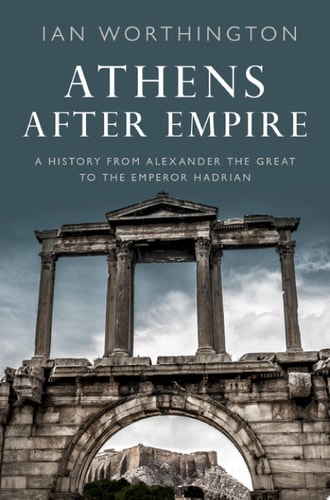
When We Think Of Ancient Athens, The Image Invariably Coming To Mind Is Of The Classical City, With Monuments Beautifying Everywhere; The Agora Swarming With People Conducting Business And Discussing Political Affairs; And A Flourishing Intellectual, Artistic, And Literary Life, With Life Anchored In The Ideals Of Freedom, Autonomy, And Democracy. But In 338 That Forever Changed When Philip Ii Of Macedonia Defeated A Greek Army At Chaeronea To Impose Macedonian Hegemony Over Greece. The Greeks Then Remained Under Macedonian Rule Until The New Power Of The Mediterranean World, Rome, Annexed Macedonia And Greece Into Its Empire. How Did Athens Fare In The Hellenistic And Roman Periods? What Was Going On In The City, And How Different Was It From Its Classical Predecessor? There Is A Tendency To Think Of Athens Remaining In Decline In These Eras, As Its Democracy Was Curtailed, The People Were Forced To Suffer Periods Of Autocratic Rule, And Especially Under The Romans Enforced Building Activity Turned The City Into A Provincial One Than The School Of Hellas That Pericles Had Proudly Proclaimed It To Be, And The Athenians Were Forced To Adopt The Imperial Cult And Watch Athena Share Her Home, The Sacred Acropolis, With The Goddess Roma. But This Dreary Picture Of Decline And Fall Belies Reality, As My Book Argues. It Helps Us Appreciate Hellenistic And Roman Athens And To Show It Was Still A Vibrant And Influential City. A Lot Was Still Happening In The City, And Its People Were Always Resilient: They Fought Their Macedonian Masters When They Could, And Later Sided With Foreign Kings Against Rome, Always In The Hope Of Regaining That Most Cherished Ideal, Freedom. Hellenistic Athens Is Far From Being A Postscript To Its Classical Predecessor, As Is Usually Thought. It Was Simply Different. Its Rich And Varied History Continued, Albeit In An Altered Political And Military Form, And Its Classical Self Lived On In Literature And Thought. In Fact, It Was Its Status As A Cu
Menrva's Summary
THE THESIS
This book investigates the historical reality of Athens during the Hellenistic and Roman periods to challenge the prevailing narrative of terminal decline following the loss of classical autonomy. Ian Worthington, a specialist in Greek history, utilizes archaeological evidence, literary sources, and political records to argue that Athens remained a resilient, influential, and vibrant urban center long after the Macedonian conquest of 338 BCE. The author posits that while the city's political and military structures were fundamentally altered by foreign hegemony, its cultural and intellectual identity persisted as a significant force in the Mediterranean world.
THE SCOPE MAP
What You Will Find
- Analysis of Athenian political autonomy under Macedonian and Roman rule
- Examination of the city's architectural and cultural evolution during the Hellenistic era
- Discussion of Athenian resistance efforts and diplomatic maneuvering against imperial powers
- Re-evaluation of the 'decline' narrative regarding the city's status as a center of learning
Scope Limits
- The text does not provide a comprehensive military history of the broader Mediterranean conflicts
- It does not focus on the daily lives of non-elite citizens or rural populations outside the city center
THE AUTHORITY PERSPECTIVE
Scholars and historians frequently note that this work provides a necessary corrective to the traditional focus on the Classical period by highlighting the continuity of Athenian influence. Experts highlight this as a valuable resource for understanding the complexities of urban survival under imperial administration.
Page Count:
0
Publication Date:
2023-01-01
Publisher:
New York, NY : Oxford University Press,
ISBN-10:
0190634014
ISBN-13:
9780190634018
History
Ancient Greece
Hellenism
Roman History
Political History
Community Tags
Similar Books