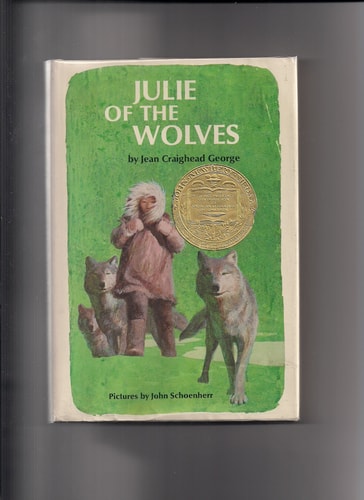
Julie of the Wolves: Treasury (Julie of the Wolves, Julie, and Julie's Wolf Pack)
0
0
As an Amazon Associate and affiliate partner, Menrva Books earns from qualifying purchases. Learn more
Author Description
To her small Eskimo village, she is known as Miyax; to her friend in San Francisco, she is Julie. When her life in the village becomes dangerous, Miyax runs away, only to find herself lost in the Alaskan wilderness. Without food and time running out, Miyax tries to survive by copying the ways of a pack of wolves. Accepted by their leader and befriended by a feisty pup named Kapu, she soon grows to love her new wolf family. Life in the wilderness is a struggle, but when she finds her way back to civilization, Miyax is torn between her old a new lives. Is she Miyax of the Eskimos -- or Julie of the wolves?
Menrva's Summary
THE PULSE
Miyax, a young girl lost in the vast Alaskan tundra, must integrate herself into a wolf pack to survive the harsh elements. Faced with the threat of starvation and the loss of her traditional way of life, she observes the social hierarchy and communication methods of the wolves to sustain herself. The narrative follows her internal conflict as she navigates the divide between her Inuit heritage and the modern world she encounters in San Francisco. The story utilizes a third-person perspective to detail the physical realities of Arctic survival and the complex emotional bond between human and animal.
INSIDE THE PAGES
- Detailed descriptions of Arctic flora and fauna
- Exploration of Inuit cultural traditions and modernization
- Analysis of wolf pack social dynamics and behavior
- Themes of isolation and self-reliance
- Contrast between urban life and wilderness survival
- Development of the protagonist's dual identity
- Focus on environmental stewardship and respect for nature
- Pacing that mirrors the slow, deliberate movements of survival
THE COLLECTIVE ECHO
Readers and critics frequently highlight the book's immersive depiction of the Alaskan wilderness and its respectful portrayal of Inuit culture. Discussion often centers on the protagonist's psychological growth as she balances her two identities, Miyax and Julie. The narrative is noted for its educational value regarding wolf behavior, which is woven seamlessly into the survival plot. Many readers appreciate the atmospheric writing style that emphasizes the quiet, often brutal beauty of the natural world. The work remains a staple in discussions regarding nature-focused literature for younger audiences.
Page Count:
588
Publication Date:
1972-01-01
Publisher:
HarperCollins
ISBN-10:
0060002395
ISBN-13:
9780060002398
Young Adult
Nature
Adventure
Survival
Coming of Age
Children