Author Description
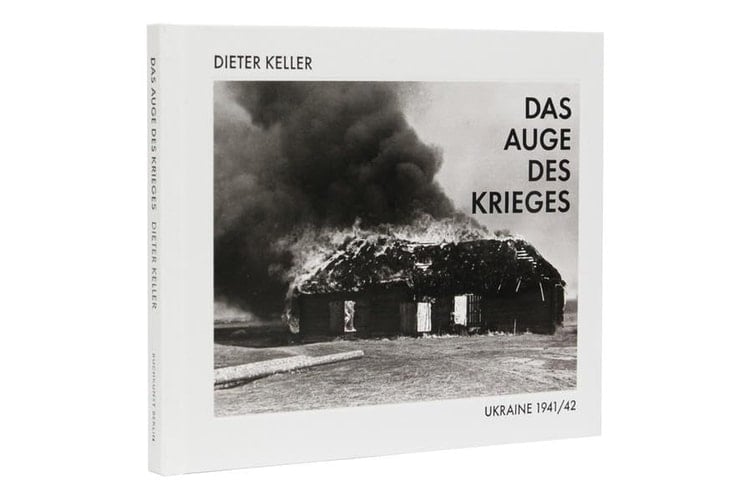
Dieter Keller (1909-1985) was a close friend of New Objectivity and Bauhaus artists before and during the Second World War. The contact to Willi Baumeister, Alexej von Jawlensky, Ida Kerkovius, cultivated over many years, and a friendship with Oskar Schlemmer documented in over 90 letters formed his artistic vision and influenced his photographic compositions considerably. In 1941/42 Dieter Keller was stationed as a German soldier in the border area between Ukraine and Belarus. During this time, despite a strict military ban, he succeeded in photographing civilians and war victims, secretly exposing several films and smuggling them to Germany. Keller photographed with a Soviet Leica replica, a so-called Fedka. After the war he developed the 35mm film rolls in his house in Stuttgart-Vaihingen and made 201 enlargements as unique copies. The negative films produced on the carrier base nitrocellulose burned in 1958 by spontaneous combustion. Dieter Keller used the means of serial and informal photography at a very early stage and created cinematic-looking image sequences to stimulate a subjective experience of reality. Keller's photographic translation of images of cruelty and apocalyptic-looking destruction into abstract and formal pictorial constructions therefore does not lead to the usual emotional flattening and blunting process of documentary photography, but rather intensifies the subjective involvement. Even by today's standards, Dieter Keller follows a seemingly modern pictorial aesthetic, which on the one hand is due to the influence of his artist friends, but on the other hand also makes it clear that the artistically trained photographer of the Bauhaus period knew how to use aesthetic perception in general as the key to processing reality and coping psychologically.
Page Count:
117
Publication Date:
2020-01-01
ISBN-10:
3981980522
ISBN-13:
9783981980523