Author Description
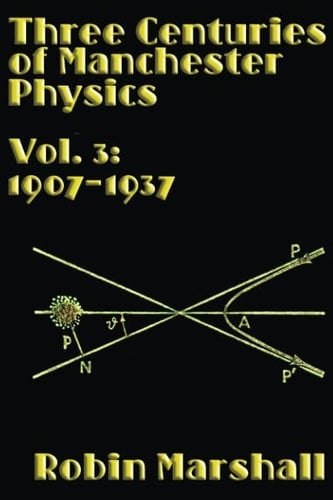
In 1911, Manchester became the central powerhouse of physics on the planet, with the discovery of the atomic nucleus. It had taken over 200 years from when a University was first mooted for Manchester in 1641, until a college of University stature was founded in 1851. This volume covers the story from 1907 to 1937, during which period the Manchester Physics Department was led by two Nobel Prize winners, Ernest Rutherford from 1907 to 1919 and William Lawrence Bragg from 1919 to 1937.A feature of these two regimes is that the Department became essentially monolithic, first concentrating on nuclear physics and then on X-raycrystallography. Electro-chemistry and Electrical Engineering becamedepartments in their own right and Meteorology was allowed to fade.A feature of this period is that physics research outside the University becamedwarfed by research within it. Meanwhile, at the College of Technology, physics was slowly shedding its former role as a service provider to chemistry and engineering, becoming a strong department in its own right.The time period starts just before the First World War and ends with the departure of Bragg in 1937. The arrival of Patrick Maynard Stuart Blackett in that same year with the Second World War imminent, is covered in the next volume.This book is lavishly illustrated with images, many of which have never been seen in public before. A special feature is the spectacular colouring of original monochrome pictures, using mathematical inverse matrix algorithms.
Page Count:
226
Publication Date:
2018-07-30
ISBN-10:
1973260980
ISBN-13:
9781973260981