Author Description
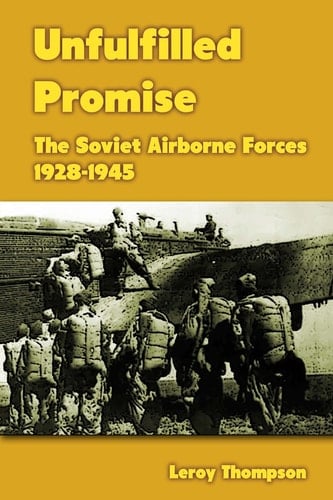
Merriam Press Military Monograph No. 8 Fifth Edition, 2012 The Soviet Union pioneered the use of parachute troops during the 1930s. However, few of the large-scale Soviet parachute drops attempted by the Soviets during World War II were successes by Western standards. There were inherent differences in the Soviet philosophy of airborne warfare which caused them to view many of their airborne operations in a far different light than other countries. The relationship between the Soviet airborne forces and the partisans was constantly considered by the Soviet High Command when planning airborne operations and that relationship is stressed here. This is a comprehensive history of the weapons, equipment, aircraft and gliders, training, and combat history of the elite of the Soviet armed forces in the period up to and including World War II. Contents Introduction Chapter 1: Training Chapter 2: Uniforms, Equipment and Parachutes Chapter 3: Weapons Chapter 4: The Planes Chapter 5: Gliders Chapter 6: The Partisans Chapter 7: From the Beginnings to BARBAROSSA Chapter 8: The First Six Months of War and the Near Annihilation of the Soviet Airborne Chapter 9: 1942: The First Large Soviet Airborne Operation and the Conversion of the Airborne Corps to Rifle Divisions Chapter 10: 1943: The Last Major Airborne Assault Chapter 11: The Defeat of the Reich and the Soviet War Against Japan Chapter 12: Conclusion Bibliography 28 photos and illustrations 2 maps 4 organization charts
Page Count:
92
Publication Date:
2012-01-01
ISBN-10:
147000707X
ISBN-13:
9781470007072