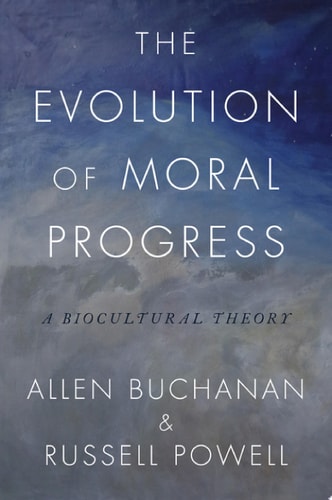
The Evolution of Moral Progress
0
0
As an Amazon Associate and affiliate partner, Menrva Books earns from qualifying purchases. Learn more
Author Description
In The Evolution Of Moral Progress, Allen Buchanan And Russell Powell Resurrect The Project Of Explaining Moral Progress. They Avoid The Errors Of Earlier Attempts By Drawing On A Wide Range Of Disciplines Including Moral And Political Philosophy, Evolutionary Biology, Evolutionary Psychology, Anthropology, History, And Sociology. Their Focus Is On One Especially Important Type Of Moral Progress: Gains In Inclusivity. They Develop A Framework To Explain Progress In Inclusivity To Also Illuminate Moral Regression--the Return To Exclusivist And Tribalistic Moral Beliefs And Attitudes. Buchanan And Powell Argue Those Tribalistic Moral Responses Are Not Hard-wired By Evolution In Human Nature. Rather, Human Beings Have An Evolved Adaptively Plastic Capacity For Both Inclusion And Exclusion, Depending On Environmental Conditions. Moral Progress In The Dimension Of Inclusivity Is Possible, But Only To The Extent That Human Beings Can Create Environments Conducive To Extending Moral Standing To All Human Beings And Even To Some Animals. Buchanan And Powell Take Biological Evolution Seriously, But With A Critical Eye, While Simultaneously Recognizing The Crucial Role Of Culture In Creating Environments In Which Moral Progress Can Occur. The Book Avoids Both Biological And Cultural Determinism. Unlike Earlier Theories Of Moral Progress, Their Theory Provides A Naturalistic Account That Is Grounded In The Best Empirical Work, And Unlike Earlier Theories It Does Not Present Moral Progress As Inevitable Or As Occurring In Definite Stages; But Rather It Recognizes The Highly Contingent And Fragile Character Of Moral Improvement.
Menrva's Summary
THE THESIS
This book investigates the mechanisms of moral progress, specifically focusing on how human societies expand or contract the scope of moral inclusivity. The authors, Allen Buchanan and Russell Powell, utilize a multidisciplinary approach that integrates moral philosophy with evolutionary biology and psychology. They argue against both biological and cultural determinism, proposing instead that moral progress is a highly contingent, fragile process dependent on the creation of specific environmental conditions that favor inclusivity over tribalism.
THE SCOPE MAP
What You Will Find
- A framework for understanding moral inclusivity and regression.
- An analysis of the adaptive plasticity of human moral responses.
- A naturalistic account of moral development that rejects teleological or inevitable progress.
- Integration of empirical data from anthropology, history, and evolutionary psychology.
Scope Limits
- The text does not provide a comprehensive history of all moral systems.
- It does not offer a predictive model for future moral outcomes due to the inherent contingency of the process.
THE AUTHORITY PERSPECTIVE
Experts recognize this work as a significant contribution to naturalistic ethics, particularly for its rigorous rejection of deterministic models. Readers frequently note the academic density of the prose, which requires a foundational understanding of both philosophical inquiry and evolutionary theory to fully grasp the authors' arguments.
Page Count:
288
Publication Date:
2018-01-01
Publisher:
Oxford University Press
ISBN-10:
0190868422
ISBN-13:
9780190868420
Philosophy
Sociology
Evolutionary Biology
Anthropology
Ethics
Political Philosophy
Community Tags
Similar Books