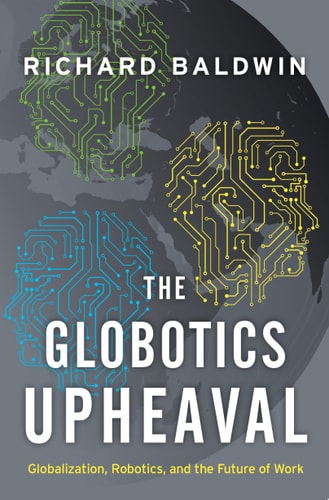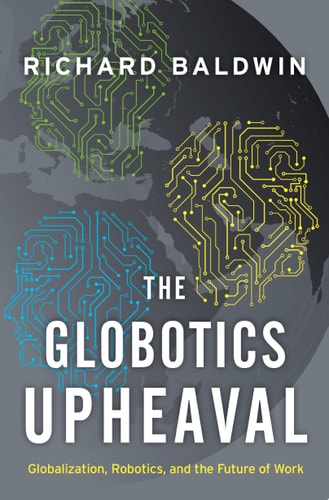
The Globotics Upheaval: Globalization, Robotics, and the Future of Work
0
0
As an Amazon Associate and affiliate partner, Menrva Books earns from qualifying purchases. Learn more
Author Description
At the root of inequality, unemployment, and populism are radical changes in the world economy. Digital technology is allowing talented foreigners to telecommute into our workplaces and compete for service and professional jobs. Instant machine translation is melting language barriers, so the ranks of these "tele-migrants" will soon include almost every educated person in the world. Computing power is dissolving humans' monopoly on thinking, enabling AI-trained computers to compete for many of the same white-collar jobs. The combination of globalization and robotics is creating the globotics upheaval, and it threatens the very foundations of the liberal welfare-state.Richard Baldwin, one of the world's leading globalization experts, argues that the inhuman speed of this transformation threatens to overwhelm our capacity to adapt. From computers in the office to automatic ordering systems in restaurants, we are familiar with the how digital technologies offer convenience while also eliminating jobs. Globotics will disrupt the lives of millions of white-collar workers much faster than automation, industrialization, and globalization disrupted the lives of factory workers in previous centuries. The result will be a backlash. Professional, white-collar, and service workers will agitate for a slowing of the unprecedented pace of disruption, as factory workers have done in years past. Baldwin argues that the globotics upheaval will be countered in the short run by "shelter-ism" - government policies that shelter some service jobs from tele-migrants and thinking computers. In the long run, people will work in more human jobs-activities that require real people to use the uniquely human ability of independent thought-and this will strengthen bonds in local communities. Offering effective strategies such as focusing on the social value of work, The Globotics Upheaval will help people prepare for the oncoming wave of an advanced robotic workforce.
Menrva's Summary
THE THESIS
The core question investigated is how the convergence of rapid globalization and advanced robotics will fundamentally disrupt the white-collar labor market and threaten the stability of the modern welfare state. Richard Baldwin, a professor of international economics and former senior staff economist for the President's Council of Economic Advisers, utilizes historical economic data and current technological trends to construct his argument. He posits that the speed of this 'globotics' transformation exceeds the pace of previous industrial shifts, necessitating a reevaluation of how societies protect workers and value human-centric labor.
THE SCOPE MAP
What You Will Find
- Analysis of 'tele-migration' enabled by digital connectivity and machine translation.
- Examination of AI-driven competition for professional and white-collar service roles.
- Theoretical framework regarding the rise of 'shelter-ism' as a political response to economic displacement.
Scope Limits
- The book does not provide a comprehensive technical manual for AI implementation.
- It does not offer a detailed legislative roadmap for specific national welfare reforms.
THE AUTHORITY PERSPECTIVE
Experts in international economics frequently cite this work as a significant contribution to the discourse on the future of work and the societal impacts of automation. Readers often note the accessibility of the prose despite the complex economic theories presented throughout the text.
Page Count:
304
Publication Date:
2019-01-01
Publisher:
Oxford University Press
ISBN-10:
0190901780
ISBN-13:
9780190901783
Economics
Robotics
Globalization
Sociology
Trades & Technology
Labor
Office Technology
Employees
Technology & Engineering
Technology
Community Tags
Similar Books