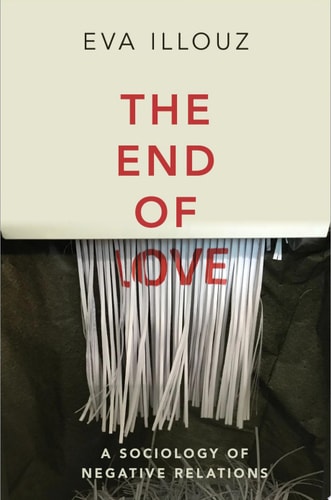
The End of Love: A Sociology of Negative Relations
0
0
As an Amazon Associate and affiliate partner, Menrva Books earns from qualifying purchases. Learn more
Author Description
Western culture has endlessly represented the ways in which love miraculously erupts in people's lives, the mythical moment in which one knows someone is destined for us; the feverish waiting for a phone call or an email, the thrill that runs our spine at the mere thought of him or her. Yet, a culture that has so much to say about love is virtually silent on the no less mysterious moments when we avoid falling in love, where we fall out of love, when the one who kept us awake at night now leaves us indifferent, or when we hurry away from those who excited us a few months or even a few hours before.In The End of Love, Eva Illouz documents the multifarious ways in which relationships end. She argues that if modern love was once marked by the freedom to enter sexual and emotional bonds according to one's will and choice, contemporary love has now become characterized by practices of non-choice, the freedom to withdraw from relationships. Illouz dubs this process by which relationships fade, evaporate, dissolve, and break down "unloving." While sociology has classically focused on the formation of social bonds, The End of Love makes a powerful case for studying why and how social bonds collapse and dissolve.Particularly striking is the role that capitalism plays in practices of non-choice and "unloving." The unmaking of social bonds, she argues, is connected to contemporary capitalism that is characterized by practices of non-commitment and non-choice, practices that enable the quick withdrawal from a transaction and the quick realignment of prices and the breaking of loyalties. Unloving and non-choice have in turn a profound impact on society and economics as they explain why people may be having fewer children, increasingly living alone, and having less sex.The End of Love presents a profound and original analysis of the effects of capitalism and consumer culture on personal relationships and of what the dissolution of personal relationships means for capitalism.
Menrva's Summary
THE THESIS
This book investigates the sociological mechanisms behind the dissolution of modern romantic relationships and the rise of non-choice in contemporary society. Eva Illouz, a professor of sociology, utilizes a framework that bridges personal emotional experience with the structural pressures of modern capitalism. She argues that the same market logic governing consumer transactions—characterized by flexibility, withdrawal, and the avoidance of commitment—now dictates how individuals navigate the end of romantic bonds.
THE SCOPE MAP
What You Will Find
- Analysis of the transition from romantic choice to the practice of non-choice.
- Examination of how capitalist market structures influence personal emotional withdrawal.
- Theoretical exploration of the concept of "unloving" as a social phenomenon.
Scope Limits
- The text does not provide clinical psychological advice for individuals navigating personal breakups.
- It does not focus on historical romantic traditions prior to the rise of modern consumer capitalism.
THE AUTHORITY PERSPECTIVE
Scholars and critics frequently note the academic density of the prose, which demands a high level of engagement with sociological theory. Experts highlight this as a significant contribution to the study of how economic systems shape the most intimate aspects of human behavior.
Page Count:
320
Publication Date:
2019-11-06
Publisher:
Oxford University Press
ISBN-10:
0190914637
ISBN-13:
9780190914639
Non-Fiction
Social Media
Sociology
Man-woman relationships
Relationships
Capitalism
Community Tags
Similar Books