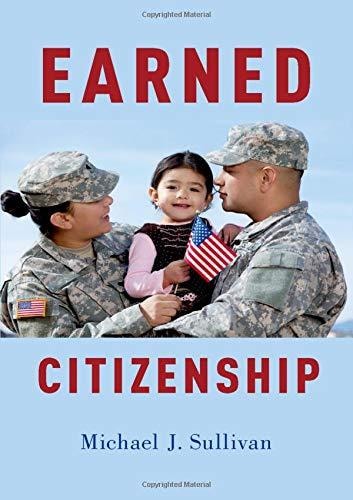
Earned Citizenship
0
0
As an Amazon Associate and affiliate partner, Menrva Books earns from qualifying purchases. Learn more
Author Description
The migration and settlement of 11 million unauthorized immigrants is among the leading political challenges facing the United States today. The majority of unauthorized immigrants in the U.S. have been here for more than five years, and are settling into American communities, working, forming families, and serving in the military, even though they may be detained and deported if they are discovered. An open question remains as to what to do about unauthorized immigrants who are already living in the United States. On one hand it is important that the government sends a message that future violations of immigration law will not be tolerated. On the other sits a deeper ethical dilemma that is the focus of this book: what do the state and citizens owe to unauthorized immigrants who have served their adopted country?Earned Citizenship argues that long-term unauthorized immigrant residents should be able to earn legalization and a pathway to citizenship through service in their adopted communities. Their service would act as restitution for immigration law violations. Military service in particular would merit naturalization in countries with a strong citizen-soldier tradition, including the United States. The book also considers the civic value of caregiving as a service to citizens and the country, contending that family immigration policies should be expanded to recognize the importance of caregiving duties for dependents. This argument is part of a broader project in political theory and public policy aimed at reconciling civic republicanism with a feminist ethic of care, and its emphasis on dependency work. As a whole, Earned Citizenship provides a non-humanitarian justification for legalizing unauthorized immigrants based on their contributions to citizens and institutions in their adopted nation.
Menrva's Summary
THE THESIS
What obligations do the state and its citizens hold toward unauthorized immigrants who have actively contributed to their adopted country through service? Michael J. Sullivan, a scholar in political theory, examines the ethical and policy-based arguments for providing a pathway to citizenship for long-term unauthorized residents. He proposes a framework where service—specifically military service and caregiving—functions as restitution for initial immigration law violations, thereby reconciling civic republicanism with a feminist ethic of care.
THE SCOPE MAP
What You Will Find
- Analysis of the citizen-soldier tradition in the United States.
- Theoretical framework integrating civic republicanism and the ethics of care.
- Policy proposals for expanding immigration criteria to include caregiving duties.
- Arguments for non-humanitarian justifications for legalization.
Scope Limits
- Does not focus on humanitarian or human rights-based arguments for immigration reform.
- Does not provide a comprehensive legislative roadmap for immediate implementation.
THE AUTHORITY PERSPECTIVE
Experts and political theorists identify this work as a significant contribution to the discourse on civic obligation and immigration reform. Readers frequently note the academic density of the prose, which is well-suited for those interested in the intersection of political philosophy and contemporary public policy.
Page Count:
296
Publication Date:
2019-04-16
Publisher:
Oxford University Press
ISBN-10:
0190918357
ISBN-13:
9780190918354
Citizenship
Political Theory
Immigration Policy
Public Policy
Illegal Aliens
Sociology
Ethics
United States
Community Tags
Other Editions(3)

Similar Books







Reader Comments
Share Your Thoughts
No comments yet. Be the first to share your thoughts!