Author Description
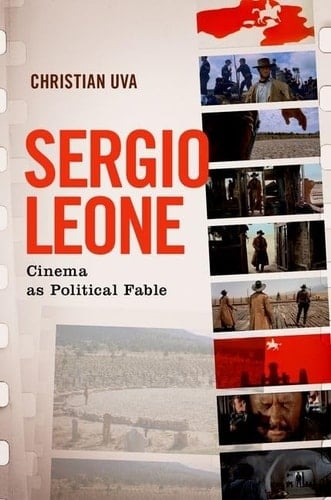
Spectacle, myth, fable - these words instantly leap to mind when considering director Sergio Leone's celebrated films. His popularization of the Spaghetti Western genre, through works like A Fistful of Dollars (1964) and Once Upon a Time in the West (1968), continues to have a profound impact on filmmakers worldwide. In this exciting new study, Italian film scholar Christian Uva explores a side of Leone's works rarely before discussed: the political. Grappling with the contradictions between Leone's politically critical cinematic eye and his aversion to ideological classification, Sergio Leone: Cinema as Political Fable makes sense of how the director's internal political tensions shaped the radical themes of his Western fables.Looking at Leone and his films through a number of lenses, the book examines the elements of Italian history and identity interwoven in the director's stories, provides cultural context for a career spanning from Italy's fascist regime to Leone's death in 1989, and discusses the influences that formed Leone's directorial identity. Uva focuses in particular on the postmodernist theory behind Leone's works, revealing the critical basis of his stylistic and narrative innovations and newly analyzing the most iconic sequences from The Good, the Bad, and the Ugly (1967), Duck, You Sucker (1971), and Once Upon a Time in America (1984). An admirably thorough take on the man and his works, Sergio Leone: Cinema as Political Fable provides fresh perspective on a director long-established in cinema canon.
Menrva's Summary
THE THESIS
This study investigates the intersection of Sergio Leone’s cinematic style and his underlying political consciousness, questioning how his films function as political fables despite his personal rejection of ideological labels. Christian Uva, an Italian film scholar, utilizes a framework of postmodernist theory to reconcile the director's stylistic innovations with the historical and social tensions of 20th-century Italy. By examining Leone’s career from the fascist era through the late 1980s, the author argues that the director’s internal contradictions are the primary drivers of his radical narrative themes.
THE SCOPE MAP
What You Will Find
- Analysis of Italian history and national identity within the Spaghetti Western genre
- Application of postmodernist theory to iconic film sequences
- Contextualization of Leone’s directorial identity against the backdrop of 20th-century Italian politics
- Detailed examinations of films including The Good, the Bad, and the Ugly, Duck, You Sucker, and Once Upon a Time in America
Scope Limits
- The text does not provide a comprehensive biography of Leone’s personal life outside of his professional career and political influences
- The analysis focuses primarily on political and postmodernist readings rather than technical production history or industry business practices
THE AUTHORITY PERSPECTIVE
Scholars and film critics recognize this work as a significant contribution to the study of Leone, specifically for its departure from purely aesthetic analyses of his films. Readers frequently note the academic density of the prose, which is well-suited for students of film theory and European cinema history.
Page Count:
152
Publication Date:
2020-02-07
ISBN-10:
019094269X
ISBN-13:
9780190942694
Biography
Cinema History
Westerns
Political Theory
Film Studies
Political Aspects
Italian Cinema
Motion pictures