Author Description
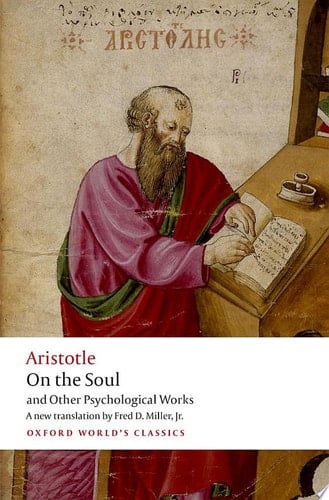
'... The More Honourable Animals Have Been Allotted A More Honourable Soul... ' What Is The Nature Of The Soul? It Is This Question That Aristotle Sought To Answer In De Anima (on The Soul). In Doing So He Offers A Psychological Theory That Encompasses Not Only Human Beings But All Living Beings. Its Basic Thesis, That The Soul Is The Form Of An Organic Body, Sets It In Sharp Contrast With Both Pre-socratic Physicalism And Platonic Dualism. On The Soul Contains Aristotle's Definition Of The Soul, And His Explanations Of Nutrition, Perception, Cognition, And Animal Self-motion. The General Theory In De Anima Is Augmented In The Shorter Works Of Parva Naturalia, Which Deal With Perception, Memory And Recollection, Sleep And Dreams, Longevity, Life-cycles, And Psycho-physiology. This New Translation Brings Together All Of Aristotle's Extant And Complementary Psychological Works, And Adds As A Supplement Ancient Testimony Concerning His Lost Writings Dealing With The Soul. The Introduction By Fred D. Miller, Jr. Explains The Central Place Of The Soul In Aristotle's Natural Science, The Unifying Themes Of His Psychological Theory, And His Continuing Relevance For Modern Philosophy And Psychology.
Menrva's Summary
THE THESIS
What is the fundamental nature of the soul and its relationship to the living body? Aristotle posits that the soul is the formal cause of an organic body, functioning as the actuality of a living entity. This work serves as a foundational psychological theory that moves away from earlier physicalist and dualist traditions by integrating biological observation with philosophical inquiry.
THE SCOPE MAP
What You Will Find
- Definitions of the soul across various living beings including plants, animals, and humans
- Explanations of biological functions such as nutrition, perception, and cognition
- Analysis of animal self-motion and psycho-physiology
- Supplementary ancient testimony regarding lost Aristotelian writings
Scope Limits
- The text does not provide a modern neuroscientific account of brain function
- It does not offer a theological or religious perspective on the afterlife
THE AUTHORITY PERSPECTIVE
Scholars and philosophers regard this text as a foundational document for understanding the history of psychology and the philosophy of mind. Readers frequently note the academic density of the prose, which requires careful study to grasp the nuances of Aristotelian terminology.
Page Count:
351
Publication Date:
2018-01-01
ISBN-10:
0191026425
ISBN-13:
9780191026423
Science
Psychology
Philosophy
Ancient Greek Philosophy
Classical Philosophy
Metaphysics