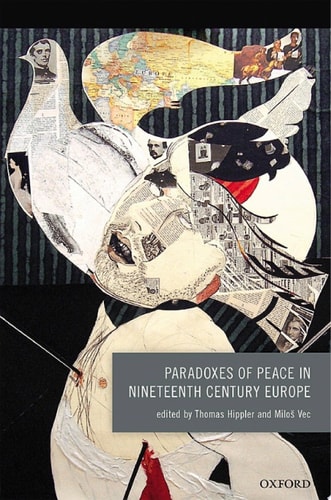
Paradoxes of Peace in Nineteenth Century Europe
0
0
As an Amazon Associate and affiliate partner, Menrva Books earns from qualifying purchases. Learn more
Author Description
'Peace' is often simplistically assumed to be war's opposite, and as such is not examined closely or critically idealized in the literature of peace studies, its crucial role in the justification of war is often overlooked. Starting from a critical view that the value of 'restoring peace' or 'keeping peace' is, and has been, regularly used as a pretext for military intervention, this book traces the conceptual history of peace in nineteenth century legal and political practice. It explores the role of the value of peace in shaping the public rhetoric and legitimizing action in general international relations, international law, international trade, colonialism, and armed conflict. Departing from the assumption that there is no peace as such, nor can there be, it examines the contradictory visions of peace that arise from conflict. These conflicting and antagonistic visions of peace are each linked to a set of motivations and interests as well as to a certain vision of legitimacy within the international realm. Each of them inevitably conveys the image of a specific enemy that has to be crushed in order to peace being installed. This book highlights the contradictions and paradoxes in nineteenth century discourses and practices of peace, particularly in Europe.
Menrva's Summary
THE THESIS
This book investigates the paradox of peace as a concept frequently utilized to justify military intervention and political conflict rather than serving as a simple antithesis to war. The authors, Thomas Hippler and Miloš Vec, analyze nineteenth-century legal and political discourse to demonstrate how peace was constructed as a tool for legitimizing international relations, colonialism, and trade. By examining the contradictory visions of peace prevalent during this era, the work argues that the pursuit of peace often necessitates the identification and destruction of a specific enemy.
THE SCOPE MAP
What You Will Find
- Analysis of nineteenth-century international law and political rhetoric.
- Examination of the intersection between peace discourse and colonial expansion.
- Exploration of the role of peace in justifying armed conflict and international trade.
Scope Limits
- The analysis is primarily restricted to the nineteenth century and the European context.
- The text does not provide a comprehensive history of all peace movements, focusing instead on state-level and legal justifications.
THE AUTHORITY PERSPECTIVE
Scholars in the field of international relations and legal history identify this work as a critical contribution to the deconstruction of peace as a neutral political value. Readers frequently note the academic density of the prose and the authors' rigorous approach to historical discourse analysis.
Page Count:
304
Publication Date:
2015-01-01
Publisher:
OUP Oxford
ISBN-10:
0191043877
ISBN-13:
9780191043871
History
Legal History
Europe
Peace Philosophy
Professional Career & Trade
International relations
European History
Community Tags
Similar Books