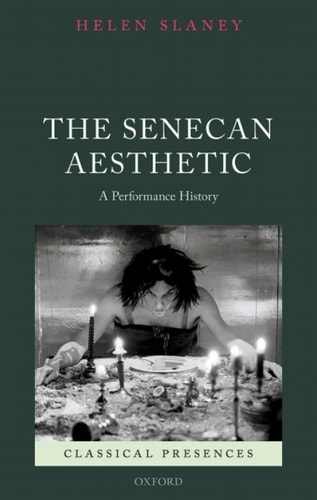
The Senecan Aesthetic: A Performance History
0
0
As an Amazon Associate and affiliate partner, Menrva Books earns from qualifying purchases. Learn more
Author Description
Alongside the works of the better-known classical Greek dramatists, the tragedies of Lucius Annaeus Seneca have exerted a profound influence over the dramaturgical development of European theatre. The Senecan Aesthetic surveys the multifarious ways in which Senecan tragedy has been staged, from the Renaissance up to the present day: plundered for neo-Latin declamation and seeping into the blood-soaked revenge tragedies of Shakespeare's contemporaries, seasoned with French neoclassical rigour, and inflated by Restoration flamboyance. In the mid-eighteenth century, the pincer movement of naturalism and philhellenism began to squeeze Seneca off the stage until August Wilhelm Schlegel's shrill denunciation silenced what he called its 'frigid bombast'. The Senecan aesthetic, repressed but still present, staged its return in the twentieth century in the work of Antonin Artaud, who regarded Seneca as 'the greatest tragedian of history'. This volume restores Seneca to a canonical position among the playwrights of antiquity, recognizing him as one of the most important, most revered, and most reviled, and in doing so reveals how theory, practice, and scholarship have always been interdependent and inseparable.
Menrva's Summary
THE THESIS
This volume investigates the enduring influence of Lucius Annaeus Seneca’s tragedies on the evolution of European theatre from the Renaissance to the modern era. Helen Slaney, a scholar of classical reception, examines how Senecan drama has been adapted, critiqued, and performed across centuries. The work argues that Seneca’s influence remains a critical, albeit often overlooked, component of Western dramatic tradition, bridging the gap between ancient theory and contemporary practice.
THE SCOPE MAP
What You Will Find
- A chronological survey of Senecan performance history from the Renaissance to the twentieth century.
- Analysis of the shift from neo-Latin declamation to Elizabethan revenge tragedy and French neoclassical styles.
- Examination of the critical reception of Seneca, including the impact of August Wilhelm Schlegel’s denunciation.
- Discussion of Seneca’s resurgence in the twentieth century through the work of Antonin Artaud.
Scope Limits
- The text focuses primarily on European theatre history rather than a comprehensive global analysis.
- It does not provide a line-by-line philological commentary on the original Latin texts.
THE AUTHORITY PERSPECTIVE
Scholars recognize this text as a significant contribution to the Classical Presences series, noting its ability to synthesize complex performance histories into a coherent narrative. Readers frequently highlight the academic rigor of the prose and the author's success in re-establishing Seneca's importance within the theatrical canon.
Page Count:
336
Publication Date:
2015-01-01
Publisher:
OUP Oxford
ISBN-10:
019105643X
ISBN-13:
9780191056437
Drama
Performance Studies
Literary Criticism
English
English & College Success
Theatre History
Criticism history
Community Tags
Similar Books