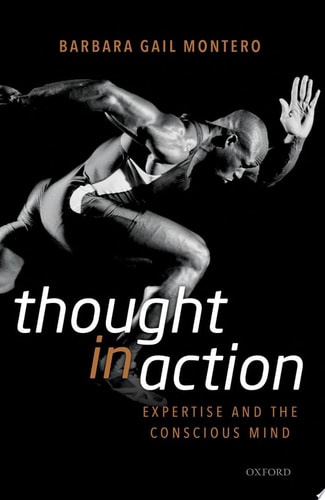
Thought in Action
0
0
As an Amazon Associate and affiliate partner, Menrva Books earns from qualifying purchases. Learn more
Author Description
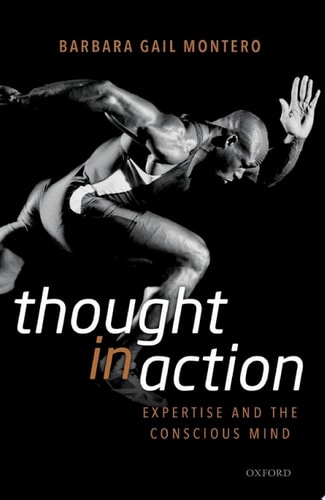
How Does Thinking Affect Doing? There Is A Widely Held View—both In Academia And In The Popular Press—that Thinking About What You Are Doing, As You Are Doing It, Hinders Performance. Once You Have Acquired The Ability To Putt A Golf Ball, Play An Arpeggio On The Piano, Or Parallel-park, Reflecting On Your Actions Leads To Inaccuracies, Blunders, And Sometimes Even Utter Paralysis—that's What Is Widely Believed. Experts, According To This View, Don't Need To Try To Do It; They Just Do It. But Is This True? After Exploring Some Of The Contemporary And Historical Manifestations Of The Idea That Highly Accomplished Skills Are Automatic And Effortless, Barbara Gail Montero Develops A Theory Of Expertise Which Emphasizes The Role Of The Conscious Mind In Expert Action. She Aims To Dispel Various Myths About Experts Who Proceed Without Any Understanding Of What Guides Their Action. (for Example, That Proverbial Chicken Sexer Who Can't Explain Why He Makes His Judgments? He Simply Doesn't Exist.) Montero's Critical Task Also Involves Analyzing Research In Both Philosophy And Psychology That Is Taken To Show That Conscious Control And Explicit Monitoring Of One's Movements Impedes Well Practiced Skills. She Explores A Wide Range Of Real-life Examples Of Optimal Performance-culled From Sports, The Performing Arts, Chess, Nursing, Medicine, The Military And Elsewhere-and Draws From Psychology, Neuroscience, And Literature To Offer A Refreshing And Persuasive View Of Expertise, According To Which Expert Action Generally Is And Ought To Be Thoughtful, Effortful, And Reflective.
Menrva's Summary
THE THESIS
Does conscious reflection on one's actions inherently hinder expert performance? Barbara Gail Montero, a philosopher specializing in the philosophy of mind and action, challenges the prevailing consensus that expert performance must be automatic and unconscious. By synthesizing research from psychology, neuroscience, and philosophy, she argues that expert action is most effective when it remains thoughtful, effortful, and reflective.
THE SCOPE MAP
What You Will Find
- Analysis of the 'automaticity' theory in expert performance.
- Interdisciplinary review of cognitive psychology and neuroscience regarding motor control.
- Case studies from diverse fields including sports, medicine, chess, and the performing arts.
Scope Limits
- The text does not provide a prescriptive 'how-to' manual for skill acquisition.
- It does not focus on the physiological mechanics of muscle memory in isolation from cognitive oversight.
THE AUTHORITY PERSPECTIVE
Scholars and readers frequently note the academic rigor and philosophical depth of Montero's arguments. Experts in the field of cognitive science highlight this work as a significant counter-narrative to the long-standing belief that conscious thought is detrimental to high-level performance.
Page Count:
304
Publication Date:
2016-01-01
Publisher:
Oxford University Press
ISBN-10:
0191081701
ISBN-13:
9780191081705
Philosophy
Non-Fiction
Psychology
Expertise
Community Tags
Similar Books